%20--%3e%3cdefs%3e%3cstyle%3e%20.st0%20{%20fill:%20%231a3159;%20}%20.st1%20{%20fill:%20%2338b387;%20}%20%3c/style%3e%3c/defs%3e%3cg%3e%3cpath%20class='st0'%20d='M140.11,318.73v115.37h-28.1v-47.49h-43.72v47.49h-28.1v-115.37h28.1v45.2h43.72v-45.2h28.1Z'/%3e%3cpath%20class='st0'%20d='M262.09,318.73v115.37h-28.1v-47.49h-43.72v47.49h-28.1v-115.37h28.1v45.2h43.72v-45.2h28.1Z'/%3e%3cpath%20class='st0'%20d='M352.79,413.72h-43.06l-6.9,20.38h-29.42l41.74-115.37h32.54l41.74,115.37h-29.75l-6.9-20.38ZM345.56,392.03l-14.3-42.24-14.14,42.24h28.44Z'/%3e%3cpath%20class='st1'%20d='M477.67,370.34c-2.74,5.15-7.12,9.34-13.14,12.58-6.03,3.23-13.75,4.85-23.18,4.85h-20.71v46.34h-18.74v-114.22h39.44c8.77,0,16.2,1.51,22.27,4.52,6.08,3.02,10.63,7.1,13.64,12.25s4.52,10.9,4.52,17.25c0,5.81-1.37,11.29-4.11,16.44ZM457.3,367.63c3.51-3.23,5.25-7.81,5.25-13.73,0-12.49-7.07-18.74-21.2-18.74h-20.71v37.31h20.71c7.12,0,12.43-1.61,15.95-4.85Z'/%3e%3cpath%20class='st1'%20d='M526.16,345.93c4.54-2.57,9.94-3.86,16.19-3.86v19.39h-4.77c-7.34,0-12.9,1.86-16.68,5.59-3.78,3.72-5.67,10.19-5.67,19.39v47.66h-18.74v-90.55h18.74v13.14c2.74-4.6,6.39-8.19,10.93-10.77Z'/%3e%3cpath%20class='st1'%20d='M572.69,429.75c-6.9-3.89-12.32-9.37-16.27-16.44-3.95-7.07-5.92-15.26-5.92-24.57s2.03-17.36,6.08-24.48c4.06-7.12,9.59-12.6,16.6-16.44s14.85-5.75,23.5-5.75,16.48,1.92,23.5,5.75c7,3.83,12.54,9.31,16.59,16.44,4.06,7.12,6.09,15.29,6.09,24.48s-2.08,17.37-6.25,24.48c-4.17,7.12-9.84,12.63-17.01,16.52-7.18,3.89-15.09,5.83-23.75,5.83s-16.27-1.94-23.18-5.83ZM609.42,415.86c4.22-2.3,7.64-5.76,10.27-10.36s3.95-10.19,3.95-16.76-1.26-12.13-3.79-16.68c-2.52-4.54-5.86-7.97-10.02-10.27s-8.66-3.45-13.47-3.45-9.29,1.15-13.4,3.45c-4.1,2.3-7.36,5.73-9.77,10.27-2.41,4.55-3.62,10.11-3.62,16.68,0,9.75,2.49,17.28,7.48,22.6,4.98,5.31,11.25,7.97,18.81,7.97,4.82,0,9.34-1.15,13.56-3.45Z'/%3e%3cpath%20class='st1'%20d='M673.32,431.72c-5.65-2.58-10.11-6.09-13.39-10.52-3.29-4.44-5.05-9.4-5.26-14.88h19.39c.34,3.84,2.16,7.04,5.51,9.62,3.34,2.58,7.53,3.87,12.57,3.87s9.34-1.01,12.24-3.04c2.91-2.03,4.36-4.63,4.36-7.81,0-3.39-1.62-5.91-4.85-7.55-3.23-1.65-8.36-3.45-15.37-5.42-6.79-1.87-12.32-3.67-16.59-5.42-4.27-1.76-7.97-4.44-11.09-8.06-3.12-3.62-4.69-8.38-4.69-14.29,0-4.82,1.42-9.23,4.27-13.23,2.85-4,6.93-7.15,12.24-9.45,5.32-2.3,11.43-3.45,18.33-3.45,10.29,0,18.6,2.6,24.9,7.8,6.3,5.21,9.66,12.3,10.1,21.28h-18.74c-.33-4.05-1.97-7.28-4.93-9.69-2.95-2.41-6.96-3.62-11.99-3.62s-8.71.93-11.34,2.8c-2.63,1.87-3.95,4.33-3.95,7.39,0,2.41.88,4.44,2.63,6.09,1.75,1.64,3.89,2.93,6.41,3.86,2.52.93,6.25,2.12,11.17,3.54,6.57,1.75,11.97,3.53,16.19,5.33,4.22,1.81,7.86,4.47,10.93,7.98,3.07,3.51,4.66,8.16,4.77,13.97,0,5.15-1.43,9.75-4.28,13.8-2.84,4.06-6.88,7.24-12.07,9.54-5.21,2.3-11.32,3.45-18.33,3.45s-13.5-1.29-19.14-3.86Z'/%3e%3c/g%3e%3cg%3e%3cpath%20class='st1'%20d='M513.49,153.9c2.16,2.56,2.16,6.3,0,8.86l-7.91,9.36-2.25,2.67-10.34,12.24-12.9,15.28c-1.76,2.08-4.35,3.29-7.08,3.29h-20.25c-1.29,0-1.98-1.5-1.15-2.49l27.48-32.54,6.8-8.05c2.05-2.42,2.05-5.96,0-8.39l-6.8-8.05-27.48-32.54c-.83-.98-.13-2.49,1.15-2.49h20.25c2.73,0,5.32,1.2,7.08,3.29l12.9,15.28,10.34,12.25,2.25,2.67,7.91,9.36Z'/%3e%3cpath%20class='st0'%20d='M457.07,168.81c1.12,0,1.72,1.3,1,2.16l-29.25,34.64c-1.7,2.02-2.64,4.57-2.64,7.21v55.51c0,9.21-7.47,16.68-16.68,16.68h-61.18c-9.21,0-16.68-7.47-16.68-16.68v-51.54c0-6.18-5.01-11.18-11.18-11.18h-51.54c-9.21,0-16.68-7.46-16.68-16.68v-61.19c0-9.21,7.47-16.68,16.68-16.68h51.54c6.18,0,11.18-5.01,11.18-11.18v-51.54c0-9.21,7.47-16.68,16.68-16.68h61.19c9.21,0,16.68,7.47,16.68,16.68v55.5c0,2.64.94,5.2,2.64,7.22l29.24,34.63c.72.85.11,2.16-1,2.16h-49.17c-7.01.25-21.82,1.79-36.05,11.92,0,0-16.13,11.48-22.07,30.08-.95,2.99-3.5,10.12,1.28,11.12,2.85.59,5.13-2.58,6.37-4.68,1.64-2.75,3.58-5.29,5.75-7.65,1.88-2.05,3.83-4.02,5.84-5.95,4.66-4.49,9.18-6.81,11.87-8.19,10.36-5.32,20.67-5.96,27.39-5.68h48.8Z'/%3e%3c/g%3e%3c/svg%3e)
Find the Friction: How to Identify and Fix Intake Bottlenecks for Faster Admissions
Find the Friction: How to Identify and Fix Intake Bottlenecks for Faster Admissions
Intake bottlenecks silently stall your admissions, draining referral potential and stretching your team thin. You see the delays, the missed conversions, the partner frustration - but the root causes stay hidden in the chaos. This playbook cuts through the noise with a metrics-first approach to pinpoint friction, standardize workflows, and tighten handoffs. By the end, you'll have a clear roadmap to speed referrals to SOC, boost conversion, and build partner trust that lasts. For more insights, visit this resource.
Identifying Intake Bottlenecks
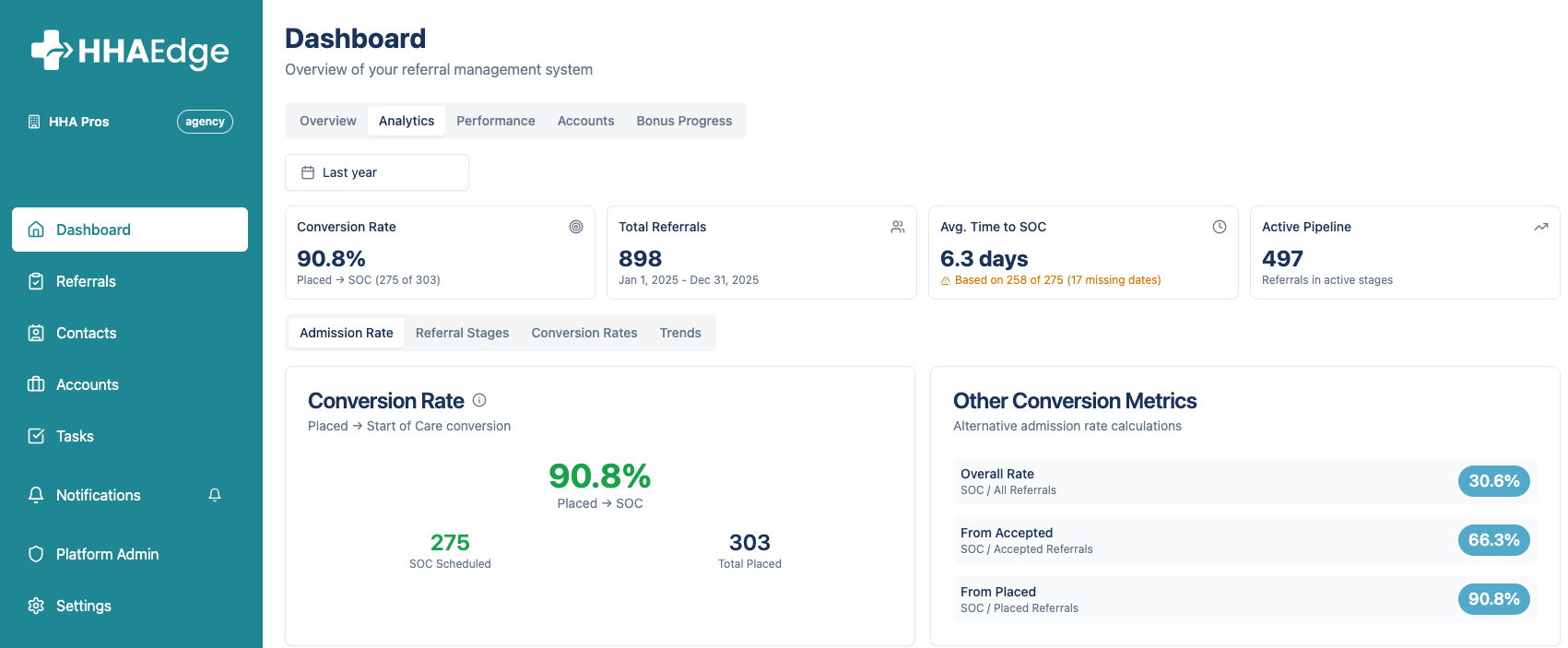
To tackle these bottlenecks, you first need to pinpoint where your system falters. Metrics hold the key to revealing the truth behind your intake process.
Metrics that Matter
Start by identifying crucial metrics. What you measure matters. Key metrics include referral-to-admission conversion rate and intake cycle time. These numbers tell you how efficiently your process moves. Keep an eye on your SOC timeliness as well. If referrals linger too long, you risk losing potential patients. A successful intake system thrives on timely and accurate data.
Consider this: only 60% of referrals in many agencies transition smoothly to admissions. Tracking these figures can reveal hidden inefficiencies. Regularly review your data to stay proactive. For more on improving slow processes, check out this resource.
Common Friction Points
Where does your process stumble? Common friction points often include manual data entry and unclear handoffs. These slow you down. Your team may struggle with outdated systems or lack of integration between tools. This fragmentation causes confusion and delays.
Imagine a day when your intake staff no longer battles spreadsheets but focuses on patient care. Identifying friction points allows you to streamline processes and free up valuable time. The sooner you address these issues, the smoother your operations will run.
Finding the Root Cause
Discovering the root cause of bottlenecks demands a deeper dive. Often, it's not just one issue but a combination of factors. Look at your intake workflow standardization. Are procedures consistent across all branches? Disparities can lead to errors and inefficiencies.
Engage your team in discussions to gather insights. They can reveal challenges that might not be evident from metrics alone. A thorough examination will help you uncover hidden problems, allowing you to implement effective solutions.
Fixing Bottlenecks for Faster Admissions
Once you’ve identified the bottlenecks, it's time to implement solutions. Speedy admissions rely on clear, efficient processes.
Streamlining Handoffs
Effective handoffs are the backbone of a smooth intake process. Clear communication ensures no information gets lost between departments. Define roles and responsibilities clearly. Everyone should know their part in the process. Utilize tools that provide visibility into each step, reducing misunderstandings.
A reliable handoff system minimizes referral leakage. This means more patients admitted and fewer opportunities lost to competitors. Remember, a seamless handoff process builds trust with partners, enhancing your agency’s reputation.
EMR CRM Integration
Integrating your EMR and CRM systems is vital. It creates a single source of truth, eliminating data silos. This integration should be a priority. It reduces manual entry, decreasing errors and saving time. Automation not only streamlines operations but also ensures data accuracy.
Consider the following: agencies that integrate their systems report a 20% increase in efficiency. This efficiency translates to faster admissions and improved patient satisfaction. For more on overcoming bottlenecks with analytics, explore this source.
Automating Workflows
Automation is like having an extra pair of hands. Automate repetitive tasks to free up your team for more critical activities. This includes things like scheduling and follow-ups. By reducing manual intervention, you lower the risk of human error.
Automated workflows also enhance the consistency of your intake process. They ensure that every referral follows the same path, reducing discrepancies. The result? A faster, more reliable admission process that every team member can depend on.
Standardizing and Sustaining Improvements
Implementing changes is only the beginning. To see lasting results, you must standardize and sustain these improvements.
Intake Dashboard Insights
Dashboards offer a bird's-eye view of your operations. They provide real-time data on key metrics, helping you make informed decisions. With a well-designed dashboard, you can spot trends and address issues before they become major problems.
For instance, an intake dashboard can highlight sudden drops in conversion rates, prompting immediate action. By using dashboards, you maintain a proactive stance, keeping your intake system running smoothly. For more on fixing clogged systems, see this article.
Establishing Governance Cadence
Regular governance meetings ensure everyone stays on track. Establish a cadence that works for your team, whether weekly or biweekly. These meetings are a space to review metrics, discuss challenges, and celebrate successes.
Governance meetings promote accountability. They provide a forum for addressing concerns and planning improvements. With a consistent rhythm, your team remains engaged and focused on achieving shared goals.
Capacity Management and Partner Retention
Efficient capacity management ensures you can handle intake surges without compromising quality. Plan for peak times by understanding your capacity limits. This foresight helps you allocate resources effectively and avoid overwhelm.
Retaining partners is crucial for sustained success. By providing reliable service and maintaining open communication, you build strong, lasting partnerships. This loyalty reduces referral leakage and secures your agency’s reputation in the community.
In conclusion, the path to faster admissions lies in identifying and fixing bottlenecks, implementing seamless systems, and maintaining disciplined operations. With these strategies, your agency can thrive, turning referrals into admissions with ease.
TAGS
Get More Insights Like This
Join 500+ home health professionals receiving weekly strategies to grow their census
Ready to Transform Your Agency?
Download our free playbook or book a free 20-Minute Referral Review to get started
Related Articles
One Source. Zero Leaks. How to Build a Single Source of Truth for Referral Operations
One Source. Zero Leaks. How to Build a Single Source of Truth for Referral Operations Referral leaks drain your growth and muddy your data.
Plug the Leaks: Referral Leakage Prevention Strategies for Home Health
Plug the Leaks: Referral Leakage Prevention Strategies for Home Health Referral leakage is draining your agency’s growth and wasting precious time.
Build a Referral-to-Admission System That Scales (Without Heroics)
Build a Referral-to-Admission System That Scales (Without Heroics) You’re losing referrals every day.