%20--%3e%3cdefs%3e%3cstyle%3e%20.st0%20{%20fill:%20%231a3159;%20}%20.st1%20{%20fill:%20%2338b387;%20}%20%3c/style%3e%3c/defs%3e%3cg%3e%3cpath%20class='st0'%20d='M140.11,318.73v115.37h-28.1v-47.49h-43.72v47.49h-28.1v-115.37h28.1v45.2h43.72v-45.2h28.1Z'/%3e%3cpath%20class='st0'%20d='M262.09,318.73v115.37h-28.1v-47.49h-43.72v47.49h-28.1v-115.37h28.1v45.2h43.72v-45.2h28.1Z'/%3e%3cpath%20class='st0'%20d='M352.79,413.72h-43.06l-6.9,20.38h-29.42l41.74-115.37h32.54l41.74,115.37h-29.75l-6.9-20.38ZM345.56,392.03l-14.3-42.24-14.14,42.24h28.44Z'/%3e%3cpath%20class='st1'%20d='M477.67,370.34c-2.74,5.15-7.12,9.34-13.14,12.58-6.03,3.23-13.75,4.85-23.18,4.85h-20.71v46.34h-18.74v-114.22h39.44c8.77,0,16.2,1.51,22.27,4.52,6.08,3.02,10.63,7.1,13.64,12.25s4.52,10.9,4.52,17.25c0,5.81-1.37,11.29-4.11,16.44ZM457.3,367.63c3.51-3.23,5.25-7.81,5.25-13.73,0-12.49-7.07-18.74-21.2-18.74h-20.71v37.31h20.71c7.12,0,12.43-1.61,15.95-4.85Z'/%3e%3cpath%20class='st1'%20d='M526.16,345.93c4.54-2.57,9.94-3.86,16.19-3.86v19.39h-4.77c-7.34,0-12.9,1.86-16.68,5.59-3.78,3.72-5.67,10.19-5.67,19.39v47.66h-18.74v-90.55h18.74v13.14c2.74-4.6,6.39-8.19,10.93-10.77Z'/%3e%3cpath%20class='st1'%20d='M572.69,429.75c-6.9-3.89-12.32-9.37-16.27-16.44-3.95-7.07-5.92-15.26-5.92-24.57s2.03-17.36,6.08-24.48c4.06-7.12,9.59-12.6,16.6-16.44s14.85-5.75,23.5-5.75,16.48,1.92,23.5,5.75c7,3.83,12.54,9.31,16.59,16.44,4.06,7.12,6.09,15.29,6.09,24.48s-2.08,17.37-6.25,24.48c-4.17,7.12-9.84,12.63-17.01,16.52-7.18,3.89-15.09,5.83-23.75,5.83s-16.27-1.94-23.18-5.83ZM609.42,415.86c4.22-2.3,7.64-5.76,10.27-10.36s3.95-10.19,3.95-16.76-1.26-12.13-3.79-16.68c-2.52-4.54-5.86-7.97-10.02-10.27s-8.66-3.45-13.47-3.45-9.29,1.15-13.4,3.45c-4.1,2.3-7.36,5.73-9.77,10.27-2.41,4.55-3.62,10.11-3.62,16.68,0,9.75,2.49,17.28,7.48,22.6,4.98,5.31,11.25,7.97,18.81,7.97,4.82,0,9.34-1.15,13.56-3.45Z'/%3e%3cpath%20class='st1'%20d='M673.32,431.72c-5.65-2.58-10.11-6.09-13.39-10.52-3.29-4.44-5.05-9.4-5.26-14.88h19.39c.34,3.84,2.16,7.04,5.51,9.62,3.34,2.58,7.53,3.87,12.57,3.87s9.34-1.01,12.24-3.04c2.91-2.03,4.36-4.63,4.36-7.81,0-3.39-1.62-5.91-4.85-7.55-3.23-1.65-8.36-3.45-15.37-5.42-6.79-1.87-12.32-3.67-16.59-5.42-4.27-1.76-7.97-4.44-11.09-8.06-3.12-3.62-4.69-8.38-4.69-14.29,0-4.82,1.42-9.23,4.27-13.23,2.85-4,6.93-7.15,12.24-9.45,5.32-2.3,11.43-3.45,18.33-3.45,10.29,0,18.6,2.6,24.9,7.8,6.3,5.21,9.66,12.3,10.1,21.28h-18.74c-.33-4.05-1.97-7.28-4.93-9.69-2.95-2.41-6.96-3.62-11.99-3.62s-8.71.93-11.34,2.8c-2.63,1.87-3.95,4.33-3.95,7.39,0,2.41.88,4.44,2.63,6.09,1.75,1.64,3.89,2.93,6.41,3.86,2.52.93,6.25,2.12,11.17,3.54,6.57,1.75,11.97,3.53,16.19,5.33,4.22,1.81,7.86,4.47,10.93,7.98,3.07,3.51,4.66,8.16,4.77,13.97,0,5.15-1.43,9.75-4.28,13.8-2.84,4.06-6.88,7.24-12.07,9.54-5.21,2.3-11.32,3.45-18.33,3.45s-13.5-1.29-19.14-3.86Z'/%3e%3c/g%3e%3cg%3e%3cpath%20class='st1'%20d='M513.49,153.9c2.16,2.56,2.16,6.3,0,8.86l-7.91,9.36-2.25,2.67-10.34,12.24-12.9,15.28c-1.76,2.08-4.35,3.29-7.08,3.29h-20.25c-1.29,0-1.98-1.5-1.15-2.49l27.48-32.54,6.8-8.05c2.05-2.42,2.05-5.96,0-8.39l-6.8-8.05-27.48-32.54c-.83-.98-.13-2.49,1.15-2.49h20.25c2.73,0,5.32,1.2,7.08,3.29l12.9,15.28,10.34,12.25,2.25,2.67,7.91,9.36Z'/%3e%3cpath%20class='st0'%20d='M457.07,168.81c1.12,0,1.72,1.3,1,2.16l-29.25,34.64c-1.7,2.02-2.64,4.57-2.64,7.21v55.51c0,9.21-7.47,16.68-16.68,16.68h-61.18c-9.21,0-16.68-7.47-16.68-16.68v-51.54c0-6.18-5.01-11.18-11.18-11.18h-51.54c-9.21,0-16.68-7.46-16.68-16.68v-61.19c0-9.21,7.47-16.68,16.68-16.68h51.54c6.18,0,11.18-5.01,11.18-11.18v-51.54c0-9.21,7.47-16.68,16.68-16.68h61.19c9.21,0,16.68,7.47,16.68,16.68v55.5c0,2.64.94,5.2,2.64,7.22l29.24,34.63c.72.85.11,2.16-1,2.16h-49.17c-7.01.25-21.82,1.79-36.05,11.92,0,0-16.13,11.48-22.07,30.08-.95,2.99-3.5,10.12,1.28,11.12,2.85.59,5.13-2.58,6.37-4.68,1.64-2.75,3.58-5.29,5.75-7.65,1.88-2.05,3.83-4.02,5.84-5.95,4.66-4.49,9.18-6.81,11.87-8.19,10.36-5.32,20.67-5.96,27.39-5.68h48.8Z'/%3e%3c/g%3e%3c/svg%3e)
Plug the Leaks: Referral Leakage Prevention Strategies for Home Health
Plug the Leaks: Referral Leakage Prevention Strategies for Home Health
Referral leakage is draining your agency’s growth and wasting precious time. You already know missed referrals mean lost revenue and fragile partnerships. What you might not have yet is a clear system to identify and plug those leaks across intake and handoffs. This post shows you how to prevent referral leakage with precise steps that tighten your intake process and boost admissions conversion. [https://hhapros.com/blog/seal-the-leaks-a-systems-playbook-for-multi-location-home-health-to-protect-referral-share]
Understanding Referral Leakage

Referral leakage can silently drain your agency’s resources and impact growth. To combat it, you must understand its roots and effects on your operations.
Causes of Referral Leakage
Referral leakage often arises from fragmented systems and poor communication. Many agencies rely on manual processes like spreadsheets and faxes, leading to errors. Imagine a referral arriving via fax but getting buried under paperwork. Over-reliance on manual systems can cause such scenarios, resulting in missed referrals and lost revenue.
Impact on Home Health Agencies
The impact of leakage is significant. It means lost revenue and damaged relationships with partners. For instance, if a partner repeatedly doesn't receive updates, their trust erodes. This can lead to fewer referrals and a tarnished reputation. In an industry where every connection matters, such losses can be detrimental.
Identifying Leakage in Your System
To fix the problem, you must first identify it. Look for inconsistencies in your referral-to-admission pipeline. Use data to spot where referrals drop off. Are there specific times when referrals are missed? Do some team members handle them more efficiently? These insights will guide your improvement efforts.
Preventing Referral Leakage
Once identified, the next step is stopping leakage. Streamlined processes and clear agreements can make a significant difference.
Streamlining the Intake Process
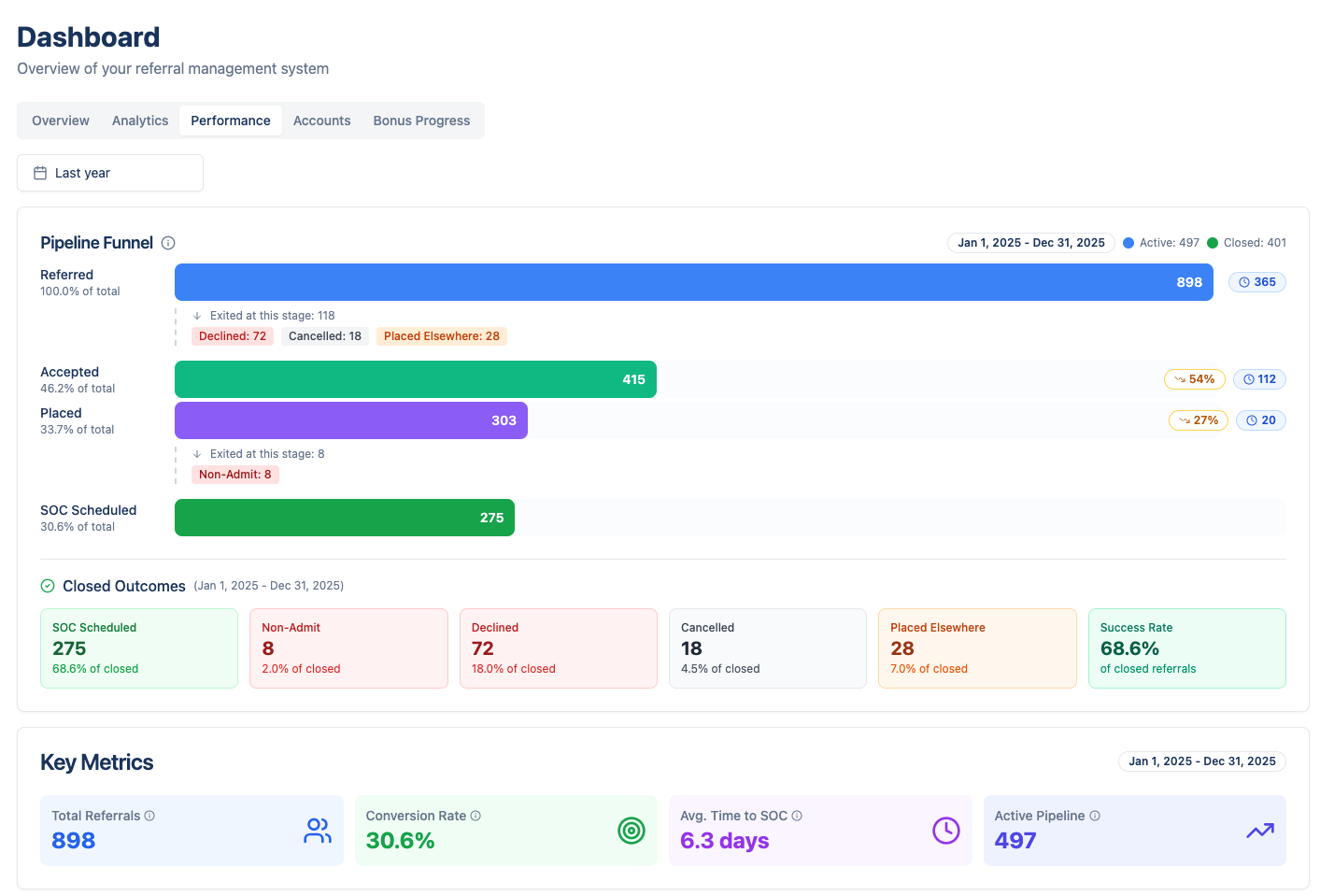
A smooth intake process is crucial. Start by evaluating your current methods. Do you rely heavily on manual entries? Consider automating repetitive tasks. For example, using a referral parsing bot can save time and reduce errors. Additionally, ensure your team has access to real-time data. A shared dashboard can improve transparency and accountability, keeping everyone on the same page.
Implementing Effective SLAs
Service Level Agreements (SLAs) create clear expectations. They outline response times and set standards for each referral stage. By defining these, you ensure quick actions and reduce lag. SLAs also promote accountability. When everyone knows their role, workflows become smoother, and the chances of leakage decrease.
Enhancing Admissions Conversion Rate
Improving your conversion rate requires a focus on efficiency. Start by analyzing your current rate. Are there common hurdles preventing admissions? Address these hurdles systematically. Set targets for conversion improvements and track progress. Regularly review your methods and adjust as needed. Consistent evaluation ensures that your strategies remain effective.
Building a Sustainable Referral System
A sustainable system is your best defense against referral leakage. Technology and standardization are key components.
Leveraging Technology for Intake Automation
Automation can revolutionize your intake process. Tools like HIPAA-compliant dashboards allow for seamless information sharing. They enhance data accuracy and reduce workload. By automating routine tasks, your team can focus on more critical areas, like patient care and partner relationships.
Using HIPAA-Compliant Dashboards
Dashboards offer a centralized view of operations. They track key metrics like referral numbers and conversion rates. With this information, you can quickly identify and rectify issues. Dashboards also ensure compliance with healthcare standards, providing peace of mind for both your agency and partners.
Ensuring Cross-Branch Standardization
Standardization across branches ensures consistency. Develop and implement uniform procedures for handling referrals. This reduces variability and ensures that every branch operates at the same high standard. With clear guidelines, your agency can provide consistent service, strengthening partner trust and enhancing your reputation.
By understanding and addressing referral leakage, you can protect your agency’s growth and reputation. Implement these strategies to ensure a smooth, efficient operation that both your team and partners can rely on.
TAGS
Get More Insights Like This
Join 500+ home health professionals receiving weekly strategies to grow their census