%20--%3e%3cdefs%3e%3cstyle%3e%20.st0%20{%20fill:%20%231a3159;%20}%20.st1%20{%20fill:%20%2338b387;%20}%20%3c/style%3e%3c/defs%3e%3cg%3e%3cpath%20class='st0'%20d='M140.11,318.73v115.37h-28.1v-47.49h-43.72v47.49h-28.1v-115.37h28.1v45.2h43.72v-45.2h28.1Z'/%3e%3cpath%20class='st0'%20d='M262.09,318.73v115.37h-28.1v-47.49h-43.72v47.49h-28.1v-115.37h28.1v45.2h43.72v-45.2h28.1Z'/%3e%3cpath%20class='st0'%20d='M352.79,413.72h-43.06l-6.9,20.38h-29.42l41.74-115.37h32.54l41.74,115.37h-29.75l-6.9-20.38ZM345.56,392.03l-14.3-42.24-14.14,42.24h28.44Z'/%3e%3cpath%20class='st1'%20d='M477.67,370.34c-2.74,5.15-7.12,9.34-13.14,12.58-6.03,3.23-13.75,4.85-23.18,4.85h-20.71v46.34h-18.74v-114.22h39.44c8.77,0,16.2,1.51,22.27,4.52,6.08,3.02,10.63,7.1,13.64,12.25s4.52,10.9,4.52,17.25c0,5.81-1.37,11.29-4.11,16.44ZM457.3,367.63c3.51-3.23,5.25-7.81,5.25-13.73,0-12.49-7.07-18.74-21.2-18.74h-20.71v37.31h20.71c7.12,0,12.43-1.61,15.95-4.85Z'/%3e%3cpath%20class='st1'%20d='M526.16,345.93c4.54-2.57,9.94-3.86,16.19-3.86v19.39h-4.77c-7.34,0-12.9,1.86-16.68,5.59-3.78,3.72-5.67,10.19-5.67,19.39v47.66h-18.74v-90.55h18.74v13.14c2.74-4.6,6.39-8.19,10.93-10.77Z'/%3e%3cpath%20class='st1'%20d='M572.69,429.75c-6.9-3.89-12.32-9.37-16.27-16.44-3.95-7.07-5.92-15.26-5.92-24.57s2.03-17.36,6.08-24.48c4.06-7.12,9.59-12.6,16.6-16.44s14.85-5.75,23.5-5.75,16.48,1.92,23.5,5.75c7,3.83,12.54,9.31,16.59,16.44,4.06,7.12,6.09,15.29,6.09,24.48s-2.08,17.37-6.25,24.48c-4.17,7.12-9.84,12.63-17.01,16.52-7.18,3.89-15.09,5.83-23.75,5.83s-16.27-1.94-23.18-5.83ZM609.42,415.86c4.22-2.3,7.64-5.76,10.27-10.36s3.95-10.19,3.95-16.76-1.26-12.13-3.79-16.68c-2.52-4.54-5.86-7.97-10.02-10.27s-8.66-3.45-13.47-3.45-9.29,1.15-13.4,3.45c-4.1,2.3-7.36,5.73-9.77,10.27-2.41,4.55-3.62,10.11-3.62,16.68,0,9.75,2.49,17.28,7.48,22.6,4.98,5.31,11.25,7.97,18.81,7.97,4.82,0,9.34-1.15,13.56-3.45Z'/%3e%3cpath%20class='st1'%20d='M673.32,431.72c-5.65-2.58-10.11-6.09-13.39-10.52-3.29-4.44-5.05-9.4-5.26-14.88h19.39c.34,3.84,2.16,7.04,5.51,9.62,3.34,2.58,7.53,3.87,12.57,3.87s9.34-1.01,12.24-3.04c2.91-2.03,4.36-4.63,4.36-7.81,0-3.39-1.62-5.91-4.85-7.55-3.23-1.65-8.36-3.45-15.37-5.42-6.79-1.87-12.32-3.67-16.59-5.42-4.27-1.76-7.97-4.44-11.09-8.06-3.12-3.62-4.69-8.38-4.69-14.29,0-4.82,1.42-9.23,4.27-13.23,2.85-4,6.93-7.15,12.24-9.45,5.32-2.3,11.43-3.45,18.33-3.45,10.29,0,18.6,2.6,24.9,7.8,6.3,5.21,9.66,12.3,10.1,21.28h-18.74c-.33-4.05-1.97-7.28-4.93-9.69-2.95-2.41-6.96-3.62-11.99-3.62s-8.71.93-11.34,2.8c-2.63,1.87-3.95,4.33-3.95,7.39,0,2.41.88,4.44,2.63,6.09,1.75,1.64,3.89,2.93,6.41,3.86,2.52.93,6.25,2.12,11.17,3.54,6.57,1.75,11.97,3.53,16.19,5.33,4.22,1.81,7.86,4.47,10.93,7.98,3.07,3.51,4.66,8.16,4.77,13.97,0,5.15-1.43,9.75-4.28,13.8-2.84,4.06-6.88,7.24-12.07,9.54-5.21,2.3-11.32,3.45-18.33,3.45s-13.5-1.29-19.14-3.86Z'/%3e%3c/g%3e%3cg%3e%3cpath%20class='st1'%20d='M513.49,153.9c2.16,2.56,2.16,6.3,0,8.86l-7.91,9.36-2.25,2.67-10.34,12.24-12.9,15.28c-1.76,2.08-4.35,3.29-7.08,3.29h-20.25c-1.29,0-1.98-1.5-1.15-2.49l27.48-32.54,6.8-8.05c2.05-2.42,2.05-5.96,0-8.39l-6.8-8.05-27.48-32.54c-.83-.98-.13-2.49,1.15-2.49h20.25c2.73,0,5.32,1.2,7.08,3.29l12.9,15.28,10.34,12.25,2.25,2.67,7.91,9.36Z'/%3e%3cpath%20class='st0'%20d='M457.07,168.81c1.12,0,1.72,1.3,1,2.16l-29.25,34.64c-1.7,2.02-2.64,4.57-2.64,7.21v55.51c0,9.21-7.47,16.68-16.68,16.68h-61.18c-9.21,0-16.68-7.47-16.68-16.68v-51.54c0-6.18-5.01-11.18-11.18-11.18h-51.54c-9.21,0-16.68-7.46-16.68-16.68v-61.19c0-9.21,7.47-16.68,16.68-16.68h51.54c6.18,0,11.18-5.01,11.18-11.18v-51.54c0-9.21,7.47-16.68,16.68-16.68h61.19c9.21,0,16.68,7.47,16.68,16.68v55.5c0,2.64.94,5.2,2.64,7.22l29.24,34.63c.72.85.11,2.16-1,2.16h-49.17c-7.01.25-21.82,1.79-36.05,11.92,0,0-16.13,11.48-22.07,30.08-.95,2.99-3.5,10.12,1.28,11.12,2.85.59,5.13-2.58,6.37-4.68,1.64-2.75,3.58-5.29,5.75-7.65,1.88-2.05,3.83-4.02,5.84-5.95,4.66-4.49,9.18-6.81,11.87-8.19,10.36-5.32,20.67-5.96,27.39-5.68h48.8Z'/%3e%3c/g%3e%3c/svg%3e)
Seal the Referral Bucket: 9 Strategies to Cut Leakage and Lock In Partner Loyalty
Seal the Referral Bucket: 9 Strategies to Cut Leakage and Lock In Partner Loyalty
Referral leakage drains your growth and chips away at partner trust. You know the stakes: every lost referral is missed revenue and a foothold for competitors. This post lays out 9 concrete strategies to tighten your referral bucket, boost partner retention, and sharpen your referral-to-admission process. Ready to see how disciplined intake governance and smart partner report cards keep your home health referrals flowing strong? Check out these best practices for reducing referral leakage.
Plugging Referral Leakages
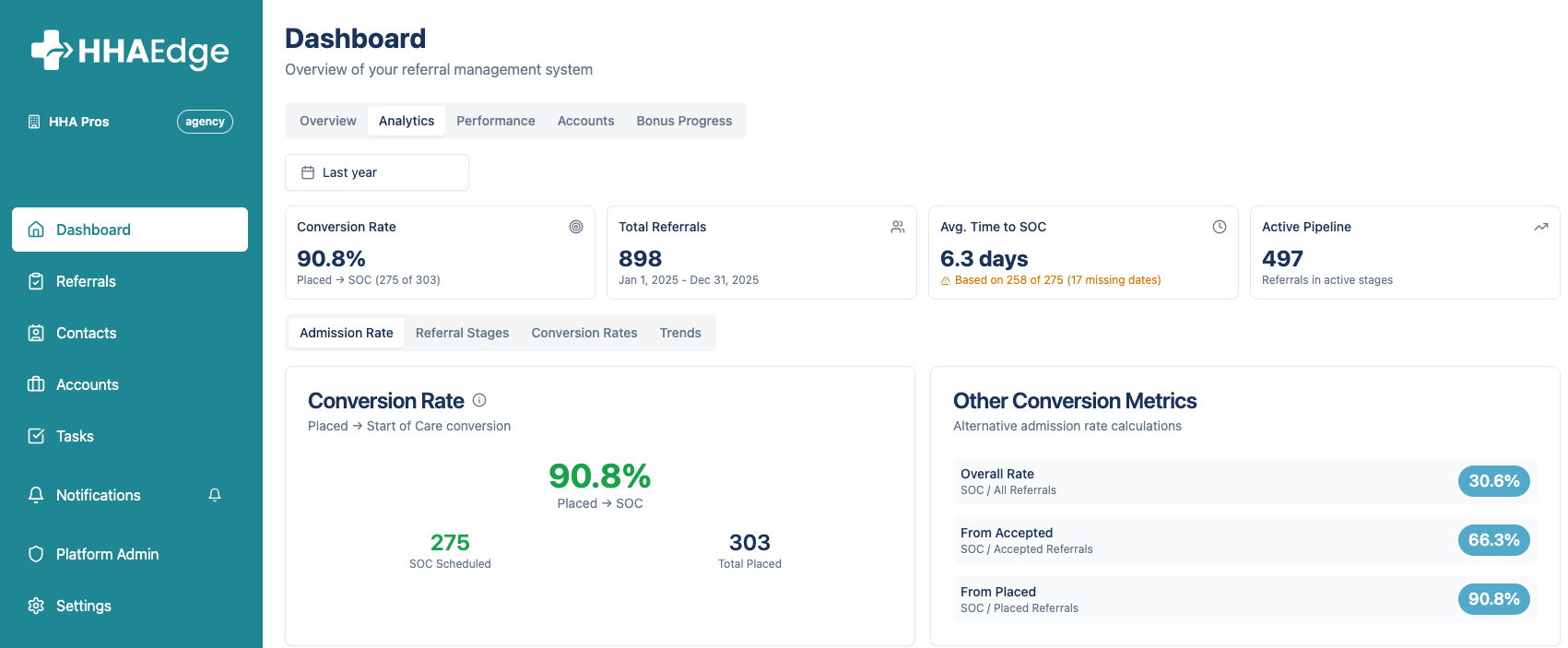
Understanding Referral Leakage
Referral leakage is a silent revenue drainer for home health agencies. Each lost referral is an opportunity for competitors to step in. You need to understand the gaps in your pipeline to address them effectively. It’s about identifying where referrals slip away and taking deliberate action to plug these holes.
When referrals come in, they should be an easy win. But the reality is often different. Referrals can get stuck in an inbox or lost in spreadsheets, causing delays. Every day they wait is a day patients might look elsewhere. You can’t afford to let these opportunities slip through your fingers.
It's crucial to look at the process from start to finish. Map out your current referral path. Where does it stall? Where do errors occur? Understanding these points will help you create a smoother flow. This not only prevents leakage but also strengthens your partner relationships.
Strategies for Leakage Reduction
Reducing leakage requires a strategic approach. Let’s break it down into actionable steps. Each step you take is a move towards greater efficiency and stronger partner loyalty. Think of it as tightening a leaky faucet - every drop counts.
Audit Your Current Process: Start by reviewing your referral pipeline. Look for bottlenecks and inefficiencies. Are there delays in response times? Do referrals get lost in communication gaps? Identifying these issues is the first step in sealing leaks.
Implement Clear Benchmarks: Set specific goals for response times and admissions. For example, aim for a response time under 5 minutes from initial contact. This shows partners that you value their referrals and act promptly.
Utilize Technology Wisely: Use your EMR systems to track every referral from start to finish. This ensures nothing falls through the cracks. With the right tools, you can streamline your intake process and reduce manual errors.
Regular Training for Staff: Ensure your team knows the importance of every referral. Training keeps everyone on the same page and ready to handle tasks efficiently.
Monitor and Adjust: Create a feedback loop. Regularly review performance metrics and adjust strategies accordingly. This keeps your process dynamic and responsive to change.
For more insights on reducing referral leakage, you can read this in-depth guide.
Boosting Partner Retention
Building Strong Partnerships
The backbone of any successful referral network is strong partnerships. Retaining partners means consistent referrals and, ultimately, growth. Building these relationships requires trust and reliable results.
Start by communicating openly with your partners. Make sure they know how much you value their business. Regular check-ins can make a huge difference. Share updates on how their referrals are being handled and the outcomes achieved. This builds confidence and loyalty.
You should also consider creating value for your partners. Offer them insights into their referral outcomes. This transparency can differentiate you from competitors. When partners see the results of their referrals, they are more likely to continue the relationship.
Importance of Partner Report Cards
A partner report card is a powerful tool for accountability and transparency. It provides partners with a clear view of how their referrals perform. This can include metrics like response times, conversion rates, and patient outcomes.
Creating a report card involves compiling data from your intake systems. Use this data to show partners exactly where they stand. It’s an honest reflection of your partnership’s success. Plus, it gives you a chance to highlight areas for improvement, strengthening the bond.
Regularly updating and sharing these report cards maintains engagement. Partners appreciate knowing how their efforts translate into results. This builds trust and encourages them to stick with you long-term.
Optimizing Referral-to-Admission
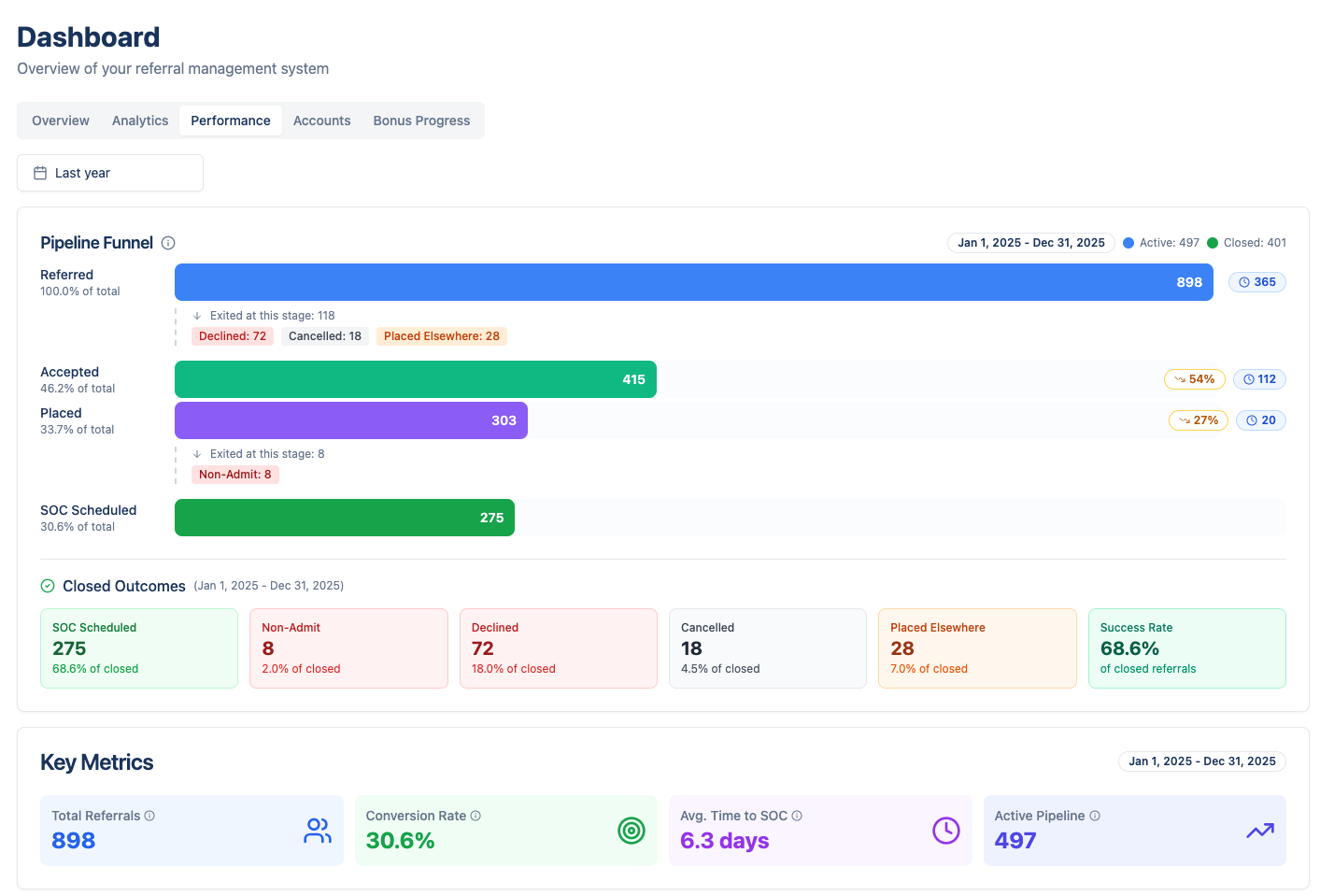
Improving Intake Workflows
A streamlined intake workflow is essential for converting referrals into admissions efficiently. It’s about having a clear path that guides a referral from initial contact to patient care. Simplifying this process reduces the chance of errors and delays.
Begin by mapping out your current workflow. Identify any unnecessary steps or redundant tasks. Remove these to create a more direct path for referrals. This not only speeds up the process but also reduces the workload for your team.
Automation can play a key role here. Use automated systems to track and manage referrals. This ensures that every referral is accounted for and progresses through the system smoothly. It also frees up your team to focus on more complex tasks.
Ensuring SOC Timeliness
Timeliness is critical in moving referrals to admissions. Starting care on time builds trust with both patients and partners. It shows that your agency is reliable and efficient.
To achieve this, set clear timelines and ensure your team understands them. Use your systems to track the start of care (SOC) for each referral. Regularly review these metrics to ensure you’re meeting your goals.
If delays occur, identify the root cause. Is it a staffing issue? Is there a problem with the workflow? Address these issues promptly to prevent them from happening again. Consistent timeliness strengthens your reputation and encourages more referrals.
By focusing on these strategies, you can significantly reduce referral leakage, boost partner retention, and optimize your referral-to-admission process. These efforts not only protect your current market position but also pave the way for future growth. Keep refining your systems, and you'll see measurable improvements in your agency’s performance.
TAGS
Get More Insights Like This
Join 500+ home health professionals receiving weekly strategies to grow their census
Ready to Transform Your Agency?
Download our free playbook or book a free 20-Minute Referral Review to get started
Related Articles
Cut SOC Cancellations to <3%: Operational Resilience and Capacity Planning That Hold Under Pressure
Cut SOC Cancellations to <3%: Operational Resilience and Capacity Planning That Hold Under Pressure Start-of-care cancellations bleed revenue and trust from your agency every day.
Make It Stick: Build Leadership Capacity That Sustains Your Home Health Operating System
Make It Stick: Build Leadership Capacity That Sustains Your Home Health Operating System Most agencies see consulting as a quick fix.
Find the leaks. Tighten the handoffs. Convert more referrals.
Find the leaks. Tighten the handoffs. Convert more referrals.