%20--%3e%3cdefs%3e%3cstyle%3e%20.st0%20{%20fill:%20%231a3159;%20}%20.st1%20{%20fill:%20%2338b387;%20}%20%3c/style%3e%3c/defs%3e%3cg%3e%3cpath%20class='st0'%20d='M140.11,318.73v115.37h-28.1v-47.49h-43.72v47.49h-28.1v-115.37h28.1v45.2h43.72v-45.2h28.1Z'/%3e%3cpath%20class='st0'%20d='M262.09,318.73v115.37h-28.1v-47.49h-43.72v47.49h-28.1v-115.37h28.1v45.2h43.72v-45.2h28.1Z'/%3e%3cpath%20class='st0'%20d='M352.79,413.72h-43.06l-6.9,20.38h-29.42l41.74-115.37h32.54l41.74,115.37h-29.75l-6.9-20.38ZM345.56,392.03l-14.3-42.24-14.14,42.24h28.44Z'/%3e%3cpath%20class='st1'%20d='M477.67,370.34c-2.74,5.15-7.12,9.34-13.14,12.58-6.03,3.23-13.75,4.85-23.18,4.85h-20.71v46.34h-18.74v-114.22h39.44c8.77,0,16.2,1.51,22.27,4.52,6.08,3.02,10.63,7.1,13.64,12.25s4.52,10.9,4.52,17.25c0,5.81-1.37,11.29-4.11,16.44ZM457.3,367.63c3.51-3.23,5.25-7.81,5.25-13.73,0-12.49-7.07-18.74-21.2-18.74h-20.71v37.31h20.71c7.12,0,12.43-1.61,15.95-4.85Z'/%3e%3cpath%20class='st1'%20d='M526.16,345.93c4.54-2.57,9.94-3.86,16.19-3.86v19.39h-4.77c-7.34,0-12.9,1.86-16.68,5.59-3.78,3.72-5.67,10.19-5.67,19.39v47.66h-18.74v-90.55h18.74v13.14c2.74-4.6,6.39-8.19,10.93-10.77Z'/%3e%3cpath%20class='st1'%20d='M572.69,429.75c-6.9-3.89-12.32-9.37-16.27-16.44-3.95-7.07-5.92-15.26-5.92-24.57s2.03-17.36,6.08-24.48c4.06-7.12,9.59-12.6,16.6-16.44s14.85-5.75,23.5-5.75,16.48,1.92,23.5,5.75c7,3.83,12.54,9.31,16.59,16.44,4.06,7.12,6.09,15.29,6.09,24.48s-2.08,17.37-6.25,24.48c-4.17,7.12-9.84,12.63-17.01,16.52-7.18,3.89-15.09,5.83-23.75,5.83s-16.27-1.94-23.18-5.83ZM609.42,415.86c4.22-2.3,7.64-5.76,10.27-10.36s3.95-10.19,3.95-16.76-1.26-12.13-3.79-16.68c-2.52-4.54-5.86-7.97-10.02-10.27s-8.66-3.45-13.47-3.45-9.29,1.15-13.4,3.45c-4.1,2.3-7.36,5.73-9.77,10.27-2.41,4.55-3.62,10.11-3.62,16.68,0,9.75,2.49,17.28,7.48,22.6,4.98,5.31,11.25,7.97,18.81,7.97,4.82,0,9.34-1.15,13.56-3.45Z'/%3e%3cpath%20class='st1'%20d='M673.32,431.72c-5.65-2.58-10.11-6.09-13.39-10.52-3.29-4.44-5.05-9.4-5.26-14.88h19.39c.34,3.84,2.16,7.04,5.51,9.62,3.34,2.58,7.53,3.87,12.57,3.87s9.34-1.01,12.24-3.04c2.91-2.03,4.36-4.63,4.36-7.81,0-3.39-1.62-5.91-4.85-7.55-3.23-1.65-8.36-3.45-15.37-5.42-6.79-1.87-12.32-3.67-16.59-5.42-4.27-1.76-7.97-4.44-11.09-8.06-3.12-3.62-4.69-8.38-4.69-14.29,0-4.82,1.42-9.23,4.27-13.23,2.85-4,6.93-7.15,12.24-9.45,5.32-2.3,11.43-3.45,18.33-3.45,10.29,0,18.6,2.6,24.9,7.8,6.3,5.21,9.66,12.3,10.1,21.28h-18.74c-.33-4.05-1.97-7.28-4.93-9.69-2.95-2.41-6.96-3.62-11.99-3.62s-8.71.93-11.34,2.8c-2.63,1.87-3.95,4.33-3.95,7.39,0,2.41.88,4.44,2.63,6.09,1.75,1.64,3.89,2.93,6.41,3.86,2.52.93,6.25,2.12,11.17,3.54,6.57,1.75,11.97,3.53,16.19,5.33,4.22,1.81,7.86,4.47,10.93,7.98,3.07,3.51,4.66,8.16,4.77,13.97,0,5.15-1.43,9.75-4.28,13.8-2.84,4.06-6.88,7.24-12.07,9.54-5.21,2.3-11.32,3.45-18.33,3.45s-13.5-1.29-19.14-3.86Z'/%3e%3c/g%3e%3cg%3e%3cpath%20class='st1'%20d='M513.49,153.9c2.16,2.56,2.16,6.3,0,8.86l-7.91,9.36-2.25,2.67-10.34,12.24-12.9,15.28c-1.76,2.08-4.35,3.29-7.08,3.29h-20.25c-1.29,0-1.98-1.5-1.15-2.49l27.48-32.54,6.8-8.05c2.05-2.42,2.05-5.96,0-8.39l-6.8-8.05-27.48-32.54c-.83-.98-.13-2.49,1.15-2.49h20.25c2.73,0,5.32,1.2,7.08,3.29l12.9,15.28,10.34,12.25,2.25,2.67,7.91,9.36Z'/%3e%3cpath%20class='st0'%20d='M457.07,168.81c1.12,0,1.72,1.3,1,2.16l-29.25,34.64c-1.7,2.02-2.64,4.57-2.64,7.21v55.51c0,9.21-7.47,16.68-16.68,16.68h-61.18c-9.21,0-16.68-7.47-16.68-16.68v-51.54c0-6.18-5.01-11.18-11.18-11.18h-51.54c-9.21,0-16.68-7.46-16.68-16.68v-61.19c0-9.21,7.47-16.68,16.68-16.68h51.54c6.18,0,11.18-5.01,11.18-11.18v-51.54c0-9.21,7.47-16.68,16.68-16.68h61.19c9.21,0,16.68,7.47,16.68,16.68v55.5c0,2.64.94,5.2,2.64,7.22l29.24,34.63c.72.85.11,2.16-1,2.16h-49.17c-7.01.25-21.82,1.79-36.05,11.92,0,0-16.13,11.48-22.07,30.08-.95,2.99-3.5,10.12,1.28,11.12,2.85.59,5.13-2.58,6.37-4.68,1.64-2.75,3.58-5.29,5.75-7.65,1.88-2.05,3.83-4.02,5.84-5.95,4.66-4.49,9.18-6.81,11.87-8.19,10.36-5.32,20.67-5.96,27.39-5.68h48.8Z'/%3e%3c/g%3e%3c/svg%3e)
Find the leaks. Tighten the handoffs. Convert more referrals.
Find the leaks. Tighten the handoffs. Convert more referrals.
Referral-to-admission bottlenecks quietly drain your growth. You see the referrals come in, but too many slip through cracks in your home health intake workflow. Fixing those leaks with clear handoffs and strict SLAs isn’t just a nice-to-have - it’s how you convert more referrals and protect your market share. Let’s map where your pipeline falters and build the systems that keep admissions steady and predictable. Learn more here.
Identify Bottlenecks in Intake Workflow
It's time to dig into the areas where your intake might be letting referrals slip. Understanding these bottlenecks is key to transforming your home health operations.
Pinpointing Referral to Admission Leaks
Every referral matters, yet many get lost in the shuffle. Imagine receiving ten referrals and only admitting five. Where do the other five go? This isn't just a numbers game; it's about keeping your system airtight. The biggest challenge is often in the handoff process. When information doesn't flow smoothly, referrals fall through the cracks.
Consider a referral that requires immediate follow-up. Delay in response means the referral might choose another agency. The key is creating a system where each referral is tracked from start to finish. Use simple tools or software that notify your team whenever a referral enters the system. This way, everyone knows their role in the process.
Analyzing Home Health Intake Data
Data tells the story of your operations. But are you listening? Regularly reviewing intake data helps you spot patterns. For instance, if most of your delayed admissions share a common trait, that’s a clue. Maybe the issue lies in processing certain forms or in communication with specific hospitals.
Start by collecting data on every step of the intake process. Note the time each takes and any issues that arise. Over time, this data will reveal trends. For example, perhaps most delays happen on Mondays. This insight allows you to allocate more resources at the start of the week. By understanding your data, you can act confidently and make informed decisions that streamline your workflows.
Tighten Intake Handoffs

Now that you've identified the leaks, let's focus on improving the transfer of information and responsibilities within your team.
Establishing Clear Intake SLAs
Setting clear expectations is crucial. Imagine telling a referral they'll hear back within two hours, but they don't. Now, you've not just lost the referral, but also trust. Service Level Agreements (SLAs) help prevent this. They define the maximum response times and quality standards.
Begin by mapping out each step in the intake process. Assign specific timeframes for each task. For instance, ensure initial contact is made within 30 minutes of receiving a referral. Track these SLAs using simple spreadsheets or software. This way, you can monitor compliance and identify areas needing improvement.
Utilizing EMR CRM Integration
Technology can simplify your intake. Many agencies use separate systems for records and communication. This fragmentation leads to inefficiencies. Instead, integrate your EMR with CRM tools. This creates a unified platform where information flows seamlessly.
With integration, referral details automatically populate in your CRM, reducing manual entry errors. This efficiency ensures your team spends less time on admin work and more on patient care. Plus, it provides a single source of truth, eliminating discrepancies between systems. Explore more about effective integrations here.
Convert More Referrals
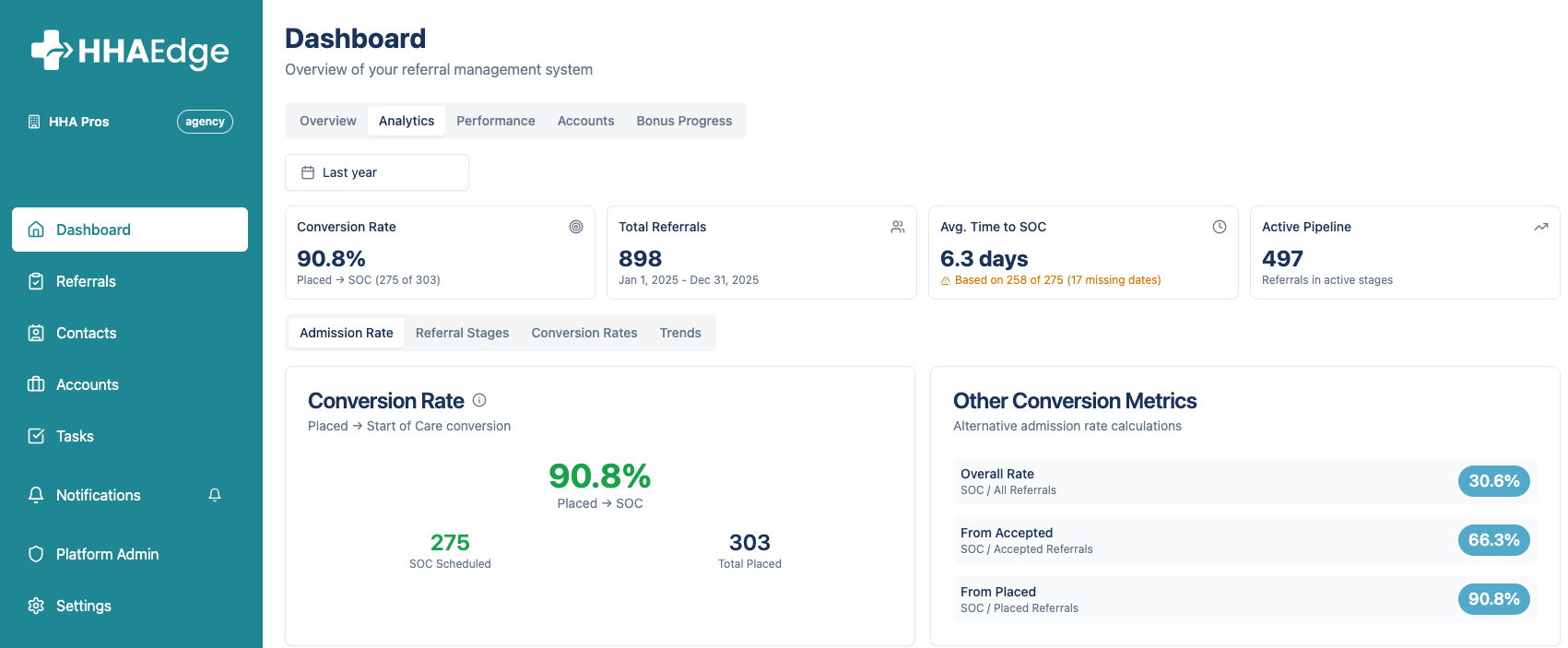
You've identified challenges and improved handoffs. Now, let's focus on converting those referrals into admissions.
Boosting Referral Conversion Rates
Conversion is the ultimate goal. Each referral represents potential care and revenue. But how do you increase your conversion rates? The answer lies in consistency. Ensure every referral receives the same high level of attention.
Create a checklist for your team to follow with each referral. This ensures no step is overlooked. Additionally, train your staff on communication techniques that build rapport and trust with prospective clients. Remember, a consistent process leads to predictable outcomes.
Enhancing SOC Timeliness and Partner Retention
The start of care (SOC) sets the tone for the patient's entire journey. A timely SOC boosts satisfaction and retention. Start by setting clear expectations with your team on SOC timelines. Use data to identify any patterns of delay and address them immediately.
Additionally, maintaining strong relationships with referral partners is crucial. Regular updates and transparent communication build trust. When partners know you're reliable, they're more likely to refer clients to you. By focusing on both SOC timeliness and partner retention, you defend your market share and foster long-term growth.
TAGS
Get More Insights Like This
Join 500+ home health professionals receiving weekly strategies to grow their census