%20--%3e%3cdefs%3e%3cstyle%3e%20.st0%20{%20fill:%20%231a3159;%20}%20.st1%20{%20fill:%20%2338b387;%20}%20%3c/style%3e%3c/defs%3e%3cg%3e%3cpath%20class='st0'%20d='M140.11,318.73v115.37h-28.1v-47.49h-43.72v47.49h-28.1v-115.37h28.1v45.2h43.72v-45.2h28.1Z'/%3e%3cpath%20class='st0'%20d='M262.09,318.73v115.37h-28.1v-47.49h-43.72v47.49h-28.1v-115.37h28.1v45.2h43.72v-45.2h28.1Z'/%3e%3cpath%20class='st0'%20d='M352.79,413.72h-43.06l-6.9,20.38h-29.42l41.74-115.37h32.54l41.74,115.37h-29.75l-6.9-20.38ZM345.56,392.03l-14.3-42.24-14.14,42.24h28.44Z'/%3e%3cpath%20class='st1'%20d='M477.67,370.34c-2.74,5.15-7.12,9.34-13.14,12.58-6.03,3.23-13.75,4.85-23.18,4.85h-20.71v46.34h-18.74v-114.22h39.44c8.77,0,16.2,1.51,22.27,4.52,6.08,3.02,10.63,7.1,13.64,12.25s4.52,10.9,4.52,17.25c0,5.81-1.37,11.29-4.11,16.44ZM457.3,367.63c3.51-3.23,5.25-7.81,5.25-13.73,0-12.49-7.07-18.74-21.2-18.74h-20.71v37.31h20.71c7.12,0,12.43-1.61,15.95-4.85Z'/%3e%3cpath%20class='st1'%20d='M526.16,345.93c4.54-2.57,9.94-3.86,16.19-3.86v19.39h-4.77c-7.34,0-12.9,1.86-16.68,5.59-3.78,3.72-5.67,10.19-5.67,19.39v47.66h-18.74v-90.55h18.74v13.14c2.74-4.6,6.39-8.19,10.93-10.77Z'/%3e%3cpath%20class='st1'%20d='M572.69,429.75c-6.9-3.89-12.32-9.37-16.27-16.44-3.95-7.07-5.92-15.26-5.92-24.57s2.03-17.36,6.08-24.48c4.06-7.12,9.59-12.6,16.6-16.44s14.85-5.75,23.5-5.75,16.48,1.92,23.5,5.75c7,3.83,12.54,9.31,16.59,16.44,4.06,7.12,6.09,15.29,6.09,24.48s-2.08,17.37-6.25,24.48c-4.17,7.12-9.84,12.63-17.01,16.52-7.18,3.89-15.09,5.83-23.75,5.83s-16.27-1.94-23.18-5.83ZM609.42,415.86c4.22-2.3,7.64-5.76,10.27-10.36s3.95-10.19,3.95-16.76-1.26-12.13-3.79-16.68c-2.52-4.54-5.86-7.97-10.02-10.27s-8.66-3.45-13.47-3.45-9.29,1.15-13.4,3.45c-4.1,2.3-7.36,5.73-9.77,10.27-2.41,4.55-3.62,10.11-3.62,16.68,0,9.75,2.49,17.28,7.48,22.6,4.98,5.31,11.25,7.97,18.81,7.97,4.82,0,9.34-1.15,13.56-3.45Z'/%3e%3cpath%20class='st1'%20d='M673.32,431.72c-5.65-2.58-10.11-6.09-13.39-10.52-3.29-4.44-5.05-9.4-5.26-14.88h19.39c.34,3.84,2.16,7.04,5.51,9.62,3.34,2.58,7.53,3.87,12.57,3.87s9.34-1.01,12.24-3.04c2.91-2.03,4.36-4.63,4.36-7.81,0-3.39-1.62-5.91-4.85-7.55-3.23-1.65-8.36-3.45-15.37-5.42-6.79-1.87-12.32-3.67-16.59-5.42-4.27-1.76-7.97-4.44-11.09-8.06-3.12-3.62-4.69-8.38-4.69-14.29,0-4.82,1.42-9.23,4.27-13.23,2.85-4,6.93-7.15,12.24-9.45,5.32-2.3,11.43-3.45,18.33-3.45,10.29,0,18.6,2.6,24.9,7.8,6.3,5.21,9.66,12.3,10.1,21.28h-18.74c-.33-4.05-1.97-7.28-4.93-9.69-2.95-2.41-6.96-3.62-11.99-3.62s-8.71.93-11.34,2.8c-2.63,1.87-3.95,4.33-3.95,7.39,0,2.41.88,4.44,2.63,6.09,1.75,1.64,3.89,2.93,6.41,3.86,2.52.93,6.25,2.12,11.17,3.54,6.57,1.75,11.97,3.53,16.19,5.33,4.22,1.81,7.86,4.47,10.93,7.98,3.07,3.51,4.66,8.16,4.77,13.97,0,5.15-1.43,9.75-4.28,13.8-2.84,4.06-6.88,7.24-12.07,9.54-5.21,2.3-11.32,3.45-18.33,3.45s-13.5-1.29-19.14-3.86Z'/%3e%3c/g%3e%3cg%3e%3cpath%20class='st1'%20d='M513.49,153.9c2.16,2.56,2.16,6.3,0,8.86l-7.91,9.36-2.25,2.67-10.34,12.24-12.9,15.28c-1.76,2.08-4.35,3.29-7.08,3.29h-20.25c-1.29,0-1.98-1.5-1.15-2.49l27.48-32.54,6.8-8.05c2.05-2.42,2.05-5.96,0-8.39l-6.8-8.05-27.48-32.54c-.83-.98-.13-2.49,1.15-2.49h20.25c2.73,0,5.32,1.2,7.08,3.29l12.9,15.28,10.34,12.25,2.25,2.67,7.91,9.36Z'/%3e%3cpath%20class='st0'%20d='M457.07,168.81c1.12,0,1.72,1.3,1,2.16l-29.25,34.64c-1.7,2.02-2.64,4.57-2.64,7.21v55.51c0,9.21-7.47,16.68-16.68,16.68h-61.18c-9.21,0-16.68-7.47-16.68-16.68v-51.54c0-6.18-5.01-11.18-11.18-11.18h-51.54c-9.21,0-16.68-7.46-16.68-16.68v-61.19c0-9.21,7.47-16.68,16.68-16.68h51.54c6.18,0,11.18-5.01,11.18-11.18v-51.54c0-9.21,7.47-16.68,16.68-16.68h61.19c9.21,0,16.68,7.47,16.68,16.68v55.5c0,2.64.94,5.2,2.64,7.22l29.24,34.63c.72.85.11,2.16-1,2.16h-49.17c-7.01.25-21.82,1.79-36.05,11.92,0,0-16.13,11.48-22.07,30.08-.95,2.99-3.5,10.12,1.28,11.12,2.85.59,5.13-2.58,6.37-4.68,1.64-2.75,3.58-5.29,5.75-7.65,1.88-2.05,3.83-4.02,5.84-5.95,4.66-4.49,9.18-6.81,11.87-8.19,10.36-5.32,20.67-5.96,27.39-5.68h48.8Z'/%3e%3c/g%3e%3c/svg%3e)
Why Home Health Agencies Lose Referrals After the First Contact - And How to Stop It
Why Home Health Agencies Lose Referrals After the First Contact - And How to Stop It
Home health referral conversion stalls far too often right after the first contact. Lost referrals after first contact aren't just numbers - they're missed opportunities, revenue at risk, and partners slipping away. If your intake workflow standardization feels patchy and your referral-to-admission process lacks clarity, you're not alone. This post cuts through the noise: pinpointing why referral leakage happens and handing you the exact playbook to fix it. Ready to plug the leaks and protect what you've built? Check out more insights in this link.
Identifying Referral Loss Points
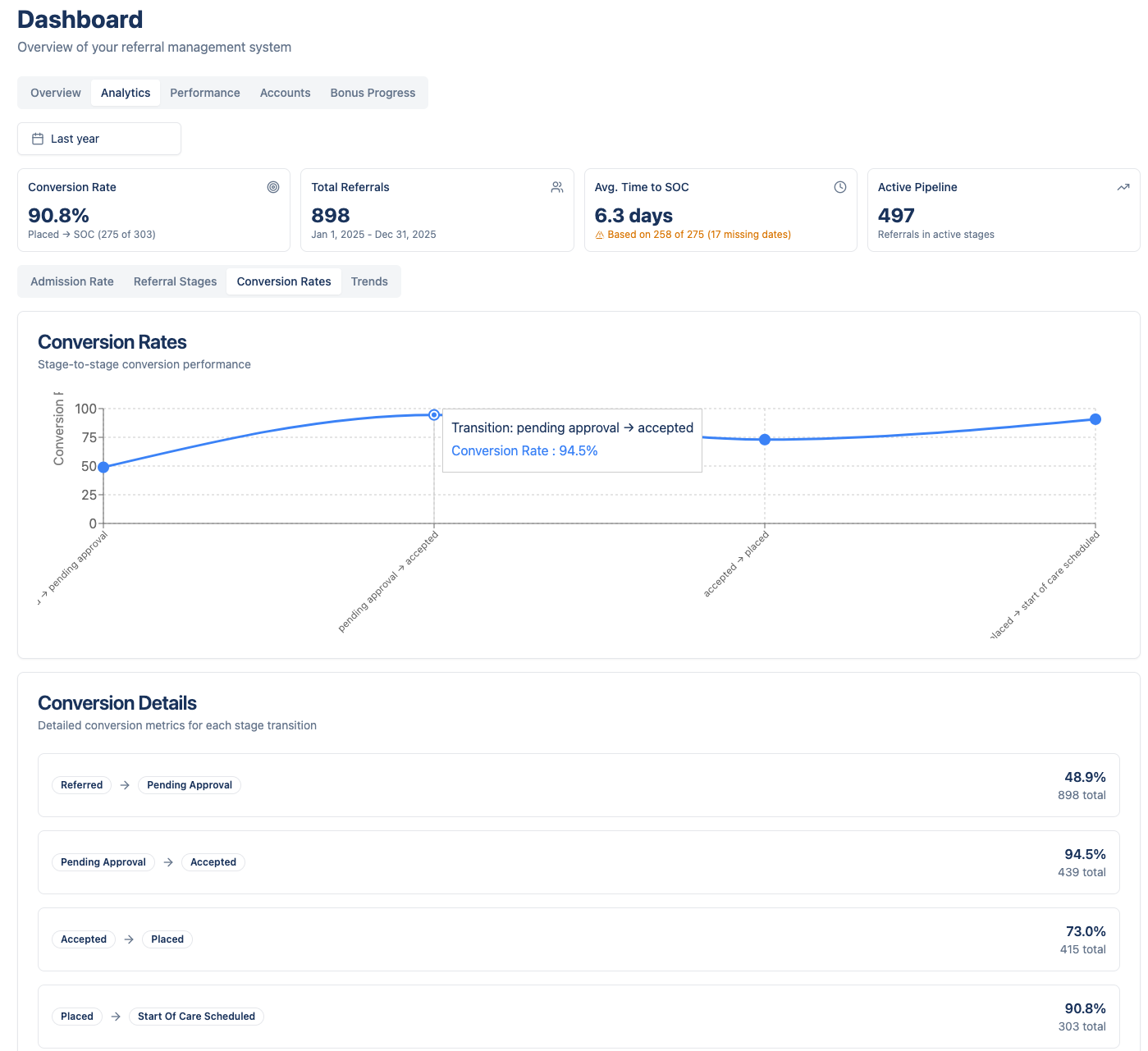
Beginning to understand where you might be losing referrals is the first step to fixing the issue. Let's look at where the cracks might be forming in your process.
The First Contact Challenge
The initial conversation sets the tone for everything that follows. If your team doesn't capture all the right details, potential referrals can slip away. One major reason this happens is due to inadequate preparation. If staff members are not equipped with a clear set of questions or lack access to patient data, the initial contact can fail to build the necessary trust.
Additionally, if the conversation feels rushed or disorganized, potential partners may hesitate to continue forward. It's crucial to ensure that your intake team is calm, collected, and confident during this interaction. Proper training and a standardized script can mitigate these risks, ensuring every first contact is productive.
Common Causes of Referral Leakage
After that initial contact, several factors can lead to lost referrals. Often, the information gathered isn't documented correctly or promptly, leading to follow-up failures. This kind of oversight can make your agency look unreliable, causing referral partners to seek other options.
Staff turnover can also contribute to this leakage. When new staff members are not properly onboarded, they may be unaware of the critical steps necessary in securing a referral. By ensuring that your processes are clear and easy to follow, you reduce the risk of losing valuable leads. According to this study, well-documented procedures help reduce errors and improve consistency.
Importance of Intake Workflow Standardization
Standardizing your intake workflow is key to reducing errors and improving efficiency. When every team member knows the exact steps to take, the entire process becomes smoother. This consistency builds trust with your referral partners, showing them that your agency is reliable.
Moreover, standardization helps you identify and plug any gaps in your processes. With a clear map of what should happen at each stage, you can quickly spot where things are going wrong. This approach not only saves time but also enhances your agency's reputation as a well-oiled machine. For additional insights on improving referral acceptance rates, explore this resource.
Strategies to Plug Referral Leaks
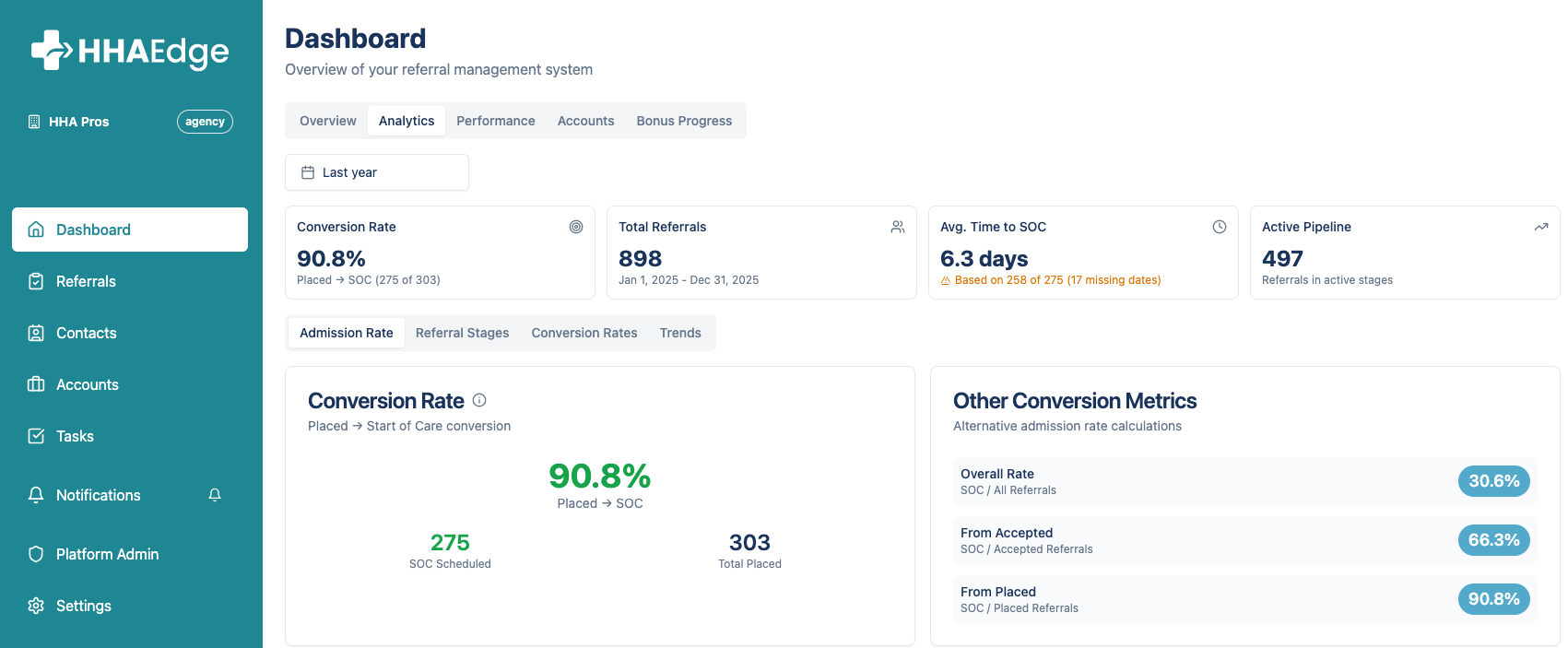
Now that we've identified potential loss points, the next move is to implement strategies that ensure referrals turn into admissions.
Building an Effective Referral-to-Admission Process
Creating a seamless journey from referral to admission starts with clarity. Ensure everyone knows their responsibilities and has the tools needed to perform them well. Start by mapping out each step in the referral process, identifying who is responsible for what, and setting clear deadlines.
Use a checklist to ensure nothing is missed during the intake process. This small step can significantly reduce errors and improve outcomes. It’s not just about getting a system in place but making sure it’s the right system tailored to your agency's needs.
Enhancing Intake SLAs and Governance Cadence
Service Level Agreements (SLAs) can be your best friend in intake management. They set expectations and hold everyone accountable. Establish SLAs for response times, follow-up actions, and documentation. This creates a culture of accountability, where everyone knows the clock is ticking.
Implement a regular review cadence to ensure SLAs are being met and to adjust them as needed. This not only keeps everyone on track but also keeps your team aligned with overall agency goals. When everyone knows what’s expected and when, the process becomes much smoother and more efficient.
Leveraging Technology for Referral Pipeline Visibility
Technology can offer a bird’s-eye view of your referral pipeline. Single source of truth dashboards provide real-time insights, helping you spot bottlenecks before they become problems. These tools can also automate many manual tasks, freeing up your team to focus on more critical areas.
Consider integrating your electronic medical record (EMR) and customer relationship management (CRM) systems to centralize information and improve accessibility. This integration aids not just in efficiency but also in maintaining a clear, organized structure within your operations. For a deeper dive into using technology to improve referral processes, learn more here.
Empowering Your Home Health Agency

Once you've plugged the leaks, it's time to focus on empowering your agency to handle future challenges seamlessly.
Tools for Operational Resilience Home Health
Operational resilience tools are essential for a stable home-health agency. They provide the flexibility needed to handle unexpected situations without disrupting service. These tools can include advanced scheduling systems and real-time communication platforms that keep everyone connected and informed.
By implementing these systems, your agency can maintain high-quality care, even during high-demand periods. This resilience not only satisfies current partners but also attracts new ones, enhancing your agency's reputation in the community.
Weekend Capacity Planning and Non-Admit Reduction
Weekends often present unique challenges for home health agencies. By planning your weekend capacity effectively, you can ensure that patient needs are met without overburdening your staff. Analyze historical data to predict demand and adjust staffing levels accordingly.
Reducing non-admits should also be a priority. This can be achieved by refining your intake processes and ensuring all necessary information is gathered upfront. By doing so, you increase the likelihood of converting a referral into an admission, boosting your agency’s success rate.
Partner Retention and Market Defense Strategies
Retaining your referral partners is just as important as gaining new ones. Regularly communicate with them to ensure their needs are met. Consider setting up a feedback loop where partners can share their experiences and suggest improvements.
Develop strategies to defend your market share against competitors. This might involve offering unique services or ensuring your agency is known for its reliability and excellence. By keeping your partners satisfied, you create a loyal base that will continue to refer patients to your agency.
By addressing these core areas and implementing the right strategies, your agency can turn potential losses into solid gains. With the right systems and processes in place, you can confidently face the future, knowing that your operations are efficient and effective.
TAGS
Get More Insights Like This
Join 500+ home health professionals receiving weekly strategies to grow their census