%20--%3e%3cdefs%3e%3cstyle%3e%20.st0%20{%20fill:%20%231a3159;%20}%20.st1%20{%20fill:%20%2338b387;%20}%20%3c/style%3e%3c/defs%3e%3cg%3e%3cpath%20class='st0'%20d='M140.11,318.73v115.37h-28.1v-47.49h-43.72v47.49h-28.1v-115.37h28.1v45.2h43.72v-45.2h28.1Z'/%3e%3cpath%20class='st0'%20d='M262.09,318.73v115.37h-28.1v-47.49h-43.72v47.49h-28.1v-115.37h28.1v45.2h43.72v-45.2h28.1Z'/%3e%3cpath%20class='st0'%20d='M352.79,413.72h-43.06l-6.9,20.38h-29.42l41.74-115.37h32.54l41.74,115.37h-29.75l-6.9-20.38ZM345.56,392.03l-14.3-42.24-14.14,42.24h28.44Z'/%3e%3cpath%20class='st1'%20d='M477.67,370.34c-2.74,5.15-7.12,9.34-13.14,12.58-6.03,3.23-13.75,4.85-23.18,4.85h-20.71v46.34h-18.74v-114.22h39.44c8.77,0,16.2,1.51,22.27,4.52,6.08,3.02,10.63,7.1,13.64,12.25s4.52,10.9,4.52,17.25c0,5.81-1.37,11.29-4.11,16.44ZM457.3,367.63c3.51-3.23,5.25-7.81,5.25-13.73,0-12.49-7.07-18.74-21.2-18.74h-20.71v37.31h20.71c7.12,0,12.43-1.61,15.95-4.85Z'/%3e%3cpath%20class='st1'%20d='M526.16,345.93c4.54-2.57,9.94-3.86,16.19-3.86v19.39h-4.77c-7.34,0-12.9,1.86-16.68,5.59-3.78,3.72-5.67,10.19-5.67,19.39v47.66h-18.74v-90.55h18.74v13.14c2.74-4.6,6.39-8.19,10.93-10.77Z'/%3e%3cpath%20class='st1'%20d='M572.69,429.75c-6.9-3.89-12.32-9.37-16.27-16.44-3.95-7.07-5.92-15.26-5.92-24.57s2.03-17.36,6.08-24.48c4.06-7.12,9.59-12.6,16.6-16.44s14.85-5.75,23.5-5.75,16.48,1.92,23.5,5.75c7,3.83,12.54,9.31,16.59,16.44,4.06,7.12,6.09,15.29,6.09,24.48s-2.08,17.37-6.25,24.48c-4.17,7.12-9.84,12.63-17.01,16.52-7.18,3.89-15.09,5.83-23.75,5.83s-16.27-1.94-23.18-5.83ZM609.42,415.86c4.22-2.3,7.64-5.76,10.27-10.36s3.95-10.19,3.95-16.76-1.26-12.13-3.79-16.68c-2.52-4.54-5.86-7.97-10.02-10.27s-8.66-3.45-13.47-3.45-9.29,1.15-13.4,3.45c-4.1,2.3-7.36,5.73-9.77,10.27-2.41,4.55-3.62,10.11-3.62,16.68,0,9.75,2.49,17.28,7.48,22.6,4.98,5.31,11.25,7.97,18.81,7.97,4.82,0,9.34-1.15,13.56-3.45Z'/%3e%3cpath%20class='st1'%20d='M673.32,431.72c-5.65-2.58-10.11-6.09-13.39-10.52-3.29-4.44-5.05-9.4-5.26-14.88h19.39c.34,3.84,2.16,7.04,5.51,9.62,3.34,2.58,7.53,3.87,12.57,3.87s9.34-1.01,12.24-3.04c2.91-2.03,4.36-4.63,4.36-7.81,0-3.39-1.62-5.91-4.85-7.55-3.23-1.65-8.36-3.45-15.37-5.42-6.79-1.87-12.32-3.67-16.59-5.42-4.27-1.76-7.97-4.44-11.09-8.06-3.12-3.62-4.69-8.38-4.69-14.29,0-4.82,1.42-9.23,4.27-13.23,2.85-4,6.93-7.15,12.24-9.45,5.32-2.3,11.43-3.45,18.33-3.45,10.29,0,18.6,2.6,24.9,7.8,6.3,5.21,9.66,12.3,10.1,21.28h-18.74c-.33-4.05-1.97-7.28-4.93-9.69-2.95-2.41-6.96-3.62-11.99-3.62s-8.71.93-11.34,2.8c-2.63,1.87-3.95,4.33-3.95,7.39,0,2.41.88,4.44,2.63,6.09,1.75,1.64,3.89,2.93,6.41,3.86,2.52.93,6.25,2.12,11.17,3.54,6.57,1.75,11.97,3.53,16.19,5.33,4.22,1.81,7.86,4.47,10.93,7.98,3.07,3.51,4.66,8.16,4.77,13.97,0,5.15-1.43,9.75-4.28,13.8-2.84,4.06-6.88,7.24-12.07,9.54-5.21,2.3-11.32,3.45-18.33,3.45s-13.5-1.29-19.14-3.86Z'/%3e%3c/g%3e%3cg%3e%3cpath%20class='st1'%20d='M513.49,153.9c2.16,2.56,2.16,6.3,0,8.86l-7.91,9.36-2.25,2.67-10.34,12.24-12.9,15.28c-1.76,2.08-4.35,3.29-7.08,3.29h-20.25c-1.29,0-1.98-1.5-1.15-2.49l27.48-32.54,6.8-8.05c2.05-2.42,2.05-5.96,0-8.39l-6.8-8.05-27.48-32.54c-.83-.98-.13-2.49,1.15-2.49h20.25c2.73,0,5.32,1.2,7.08,3.29l12.9,15.28,10.34,12.25,2.25,2.67,7.91,9.36Z'/%3e%3cpath%20class='st0'%20d='M457.07,168.81c1.12,0,1.72,1.3,1,2.16l-29.25,34.64c-1.7,2.02-2.64,4.57-2.64,7.21v55.51c0,9.21-7.47,16.68-16.68,16.68h-61.18c-9.21,0-16.68-7.47-16.68-16.68v-51.54c0-6.18-5.01-11.18-11.18-11.18h-51.54c-9.21,0-16.68-7.46-16.68-16.68v-61.19c0-9.21,7.47-16.68,16.68-16.68h51.54c6.18,0,11.18-5.01,11.18-11.18v-51.54c0-9.21,7.47-16.68,16.68-16.68h61.19c9.21,0,16.68,7.47,16.68,16.68v55.5c0,2.64.94,5.2,2.64,7.22l29.24,34.63c.72.85.11,2.16-1,2.16h-49.17c-7.01.25-21.82,1.79-36.05,11.92,0,0-16.13,11.48-22.07,30.08-.95,2.99-3.5,10.12,1.28,11.12,2.85.59,5.13-2.58,6.37-4.68,1.64-2.75,3.58-5.29,5.75-7.65,1.88-2.05,3.83-4.02,5.84-5.95,4.66-4.49,9.18-6.81,11.87-8.19,10.36-5.32,20.67-5.96,27.39-5.68h48.8Z'/%3e%3c/g%3e%3c/svg%3e)
The Market Defense Playbook: 10 Tactics Every Home-Health Agency Needs to Retain Referral Partners
The Market Defense Playbook: 10 Tactics Every Home-Health Agency Needs to Retain Referral Partners
Your referral partners are your agency’s lifeline. Losing just a few can mean weeks of empty beds and stalled growth. This playbook hands you 10 battle-tested tactics to reduce referral leakage, tighten intake standardization, and boost partner loyalty. You’ll get clear steps to stabilize your start of care and build a defense that keeps competitors at bay. Ready to protect your turf and grow with confidence? For more insights, check out this article on attracting and retaining home care clients.
Mastering Referral Retention
Are you ready to fortify your referral relationships and streamline your processes? Let's explore actionable strategies that drive results.
Key Tactics to Reduce Leakage
Referral leakage can drain your agency. Here’s how you can plug those gaps:
Identify Gaps: Audit your referral sources. Use simple checklists and feedback to find weak spots.
Improve Follow-Ups: Quick follow-ups make a big difference. Try a 24-hour response window.
Track Every Referral: Keep records of every referral from first contact to outcomes.
Small changes can lead to big improvements. If you’re seeing gaps, these steps will help you close them.
SOC Timeliness and Its Impact
Timeliness impacts your agency's reputation. Quick start of care (SOC) establishes trust:
Set Clear Timelines: Define SOC goals to ensure every patient gets prompt attention.
Monitor Performance: Use simple tools to track SOC timeliness.
Adjust as Needed: Regularly review what’s working and what’s not.
SOC efficiency boosts trust. When you meet timelines, partners notice and trust grows.
Intake Standardization for Success
Consistency is key for intake processes:
Create Clear Steps: Everyone should know the intake steps and follow them.
Train Your Team: Regular training ensures everyone’s on the same page.
Use Checklists: A simple checklist can ensure nothing’s missed during intake.
Standardization builds reliability. It shows partners you’re organized and dependable.
Building a Resilient System
A resilient system is your best defense. Let’s dive deeper into making your operations stronger and more reliable.
The Role of Home Health Dashboards
Dashboards give you quick insights:
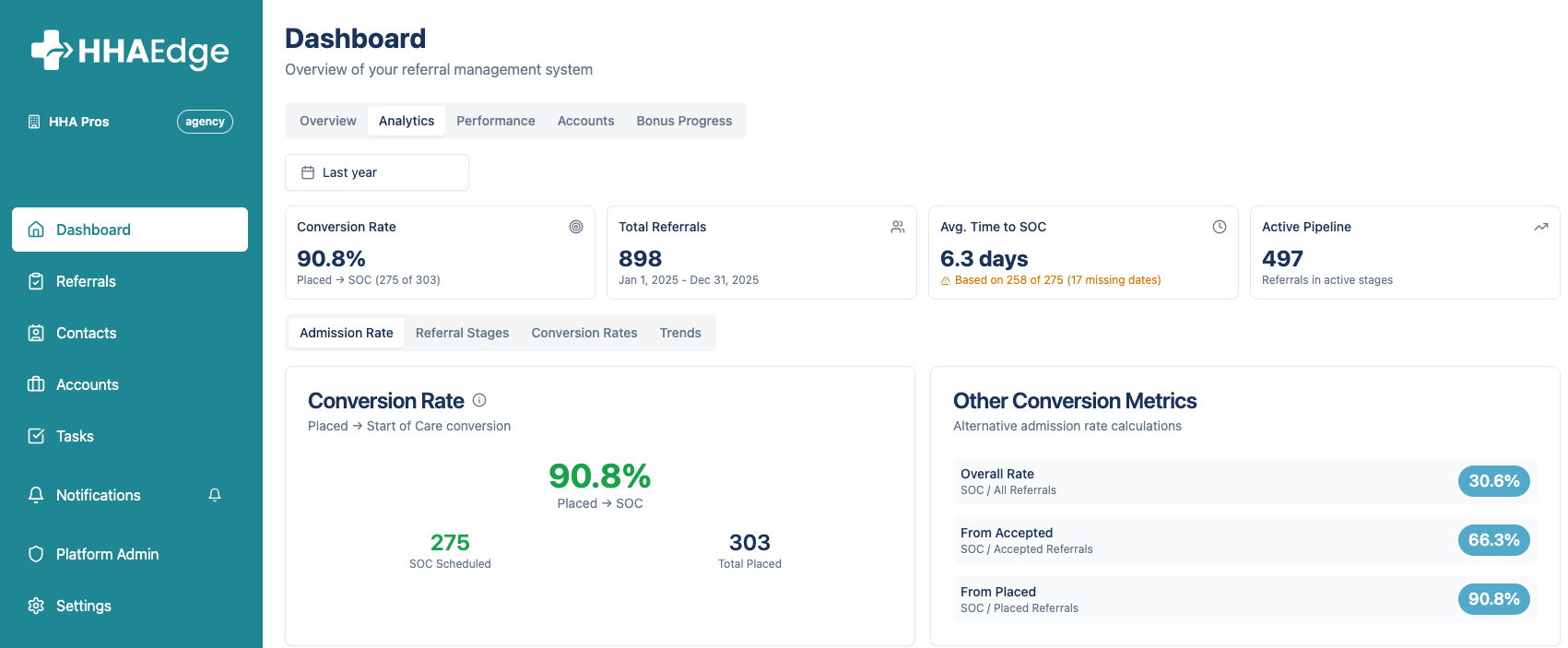
Visualize Data: See conversion rates and SOC timelines at a glance.
Identify Trends: Spot patterns before they become problems.
Make Data-Driven Decisions: Use data to guide improvements.
Dashboards make complex data simple. With clear visuals, you can act faster.
Executive Sponsor Model in Healthcare
An executive sponsor can champion improvements:
Identify a Sponsor: Choose someone who believes in the changes.
Empower Them: Give them the tools and authority to drive change.
Celebrate Wins: Acknowledge successes to keep momentum going.
Having a champion for your efforts helps them stick. They’ll push for success and support the team.
Weekend Coverage Strategies
Weekends often lack coverage, but solutions exist:
Plan Ahead: Schedule staff in advance to ensure weekend coverage.
Use On-Call Systems: Have a clear on-call system for emergencies.
Review and Adjust: Continually assess coverage effectiveness and make changes.
Effective weekend coverage shows partners that you’re reliable, no matter the day.
Strengthening Partner Relationships

Strengthening relationships with partners solidifies your market position. Let’s examine ways to build loyalty and trust.
Importance of Partner Report Cards
Report cards are a tool for transparency:
Share Results: Show partners their impact on your agency.
Seek Feedback: Encourage partners to provide input.
Build Trust: Use data to foster open conversations.
Report cards build transparency and trust. When partners see their impact, they’re more invested.
Leveraging EMR/CRM Data
Data is key to improving relationships:
Centralize Information: Keep all data in one place for easy access.
Use Insights: Analyze data to understand referral patterns.
Enhance Communication: Use data to tailor communications with partners.
Data-driven communication is more effective. It shows partners you’re engaged and informed.
Aligning Teams for Better Outcomes
Alignment increases effectiveness:
Set Shared Goals: Ensure everyone knows the agency’s objectives.
Encourage Collaboration: Foster teamwork across departments.
Measure Success: Regularly evaluate team performance against goals.
Aligned teams achieve better outcomes. When everyone’s on the same page, success follows.
In closing, applying these tactics will solidify your agency’s market defense, ensuring you retain referral partners and grow confidently.
TAGS
Get More Insights Like This
Join 500+ home health professionals receiving weekly strategies to grow their census