%20--%3e%3cdefs%3e%3cstyle%3e%20.st0%20{%20fill:%20%231a3159;%20}%20.st1%20{%20fill:%20%2338b387;%20}%20%3c/style%3e%3c/defs%3e%3cg%3e%3cpath%20class='st0'%20d='M140.11,318.73v115.37h-28.1v-47.49h-43.72v47.49h-28.1v-115.37h28.1v45.2h43.72v-45.2h28.1Z'/%3e%3cpath%20class='st0'%20d='M262.09,318.73v115.37h-28.1v-47.49h-43.72v47.49h-28.1v-115.37h28.1v45.2h43.72v-45.2h28.1Z'/%3e%3cpath%20class='st0'%20d='M352.79,413.72h-43.06l-6.9,20.38h-29.42l41.74-115.37h32.54l41.74,115.37h-29.75l-6.9-20.38ZM345.56,392.03l-14.3-42.24-14.14,42.24h28.44Z'/%3e%3cpath%20class='st1'%20d='M477.67,370.34c-2.74,5.15-7.12,9.34-13.14,12.58-6.03,3.23-13.75,4.85-23.18,4.85h-20.71v46.34h-18.74v-114.22h39.44c8.77,0,16.2,1.51,22.27,4.52,6.08,3.02,10.63,7.1,13.64,12.25s4.52,10.9,4.52,17.25c0,5.81-1.37,11.29-4.11,16.44ZM457.3,367.63c3.51-3.23,5.25-7.81,5.25-13.73,0-12.49-7.07-18.74-21.2-18.74h-20.71v37.31h20.71c7.12,0,12.43-1.61,15.95-4.85Z'/%3e%3cpath%20class='st1'%20d='M526.16,345.93c4.54-2.57,9.94-3.86,16.19-3.86v19.39h-4.77c-7.34,0-12.9,1.86-16.68,5.59-3.78,3.72-5.67,10.19-5.67,19.39v47.66h-18.74v-90.55h18.74v13.14c2.74-4.6,6.39-8.19,10.93-10.77Z'/%3e%3cpath%20class='st1'%20d='M572.69,429.75c-6.9-3.89-12.32-9.37-16.27-16.44-3.95-7.07-5.92-15.26-5.92-24.57s2.03-17.36,6.08-24.48c4.06-7.12,9.59-12.6,16.6-16.44s14.85-5.75,23.5-5.75,16.48,1.92,23.5,5.75c7,3.83,12.54,9.31,16.59,16.44,4.06,7.12,6.09,15.29,6.09,24.48s-2.08,17.37-6.25,24.48c-4.17,7.12-9.84,12.63-17.01,16.52-7.18,3.89-15.09,5.83-23.75,5.83s-16.27-1.94-23.18-5.83ZM609.42,415.86c4.22-2.3,7.64-5.76,10.27-10.36s3.95-10.19,3.95-16.76-1.26-12.13-3.79-16.68c-2.52-4.54-5.86-7.97-10.02-10.27s-8.66-3.45-13.47-3.45-9.29,1.15-13.4,3.45c-4.1,2.3-7.36,5.73-9.77,10.27-2.41,4.55-3.62,10.11-3.62,16.68,0,9.75,2.49,17.28,7.48,22.6,4.98,5.31,11.25,7.97,18.81,7.97,4.82,0,9.34-1.15,13.56-3.45Z'/%3e%3cpath%20class='st1'%20d='M673.32,431.72c-5.65-2.58-10.11-6.09-13.39-10.52-3.29-4.44-5.05-9.4-5.26-14.88h19.39c.34,3.84,2.16,7.04,5.51,9.62,3.34,2.58,7.53,3.87,12.57,3.87s9.34-1.01,12.24-3.04c2.91-2.03,4.36-4.63,4.36-7.81,0-3.39-1.62-5.91-4.85-7.55-3.23-1.65-8.36-3.45-15.37-5.42-6.79-1.87-12.32-3.67-16.59-5.42-4.27-1.76-7.97-4.44-11.09-8.06-3.12-3.62-4.69-8.38-4.69-14.29,0-4.82,1.42-9.23,4.27-13.23,2.85-4,6.93-7.15,12.24-9.45,5.32-2.3,11.43-3.45,18.33-3.45,10.29,0,18.6,2.6,24.9,7.8,6.3,5.21,9.66,12.3,10.1,21.28h-18.74c-.33-4.05-1.97-7.28-4.93-9.69-2.95-2.41-6.96-3.62-11.99-3.62s-8.71.93-11.34,2.8c-2.63,1.87-3.95,4.33-3.95,7.39,0,2.41.88,4.44,2.63,6.09,1.75,1.64,3.89,2.93,6.41,3.86,2.52.93,6.25,2.12,11.17,3.54,6.57,1.75,11.97,3.53,16.19,5.33,4.22,1.81,7.86,4.47,10.93,7.98,3.07,3.51,4.66,8.16,4.77,13.97,0,5.15-1.43,9.75-4.28,13.8-2.84,4.06-6.88,7.24-12.07,9.54-5.21,2.3-11.32,3.45-18.33,3.45s-13.5-1.29-19.14-3.86Z'/%3e%3c/g%3e%3cg%3e%3cpath%20class='st1'%20d='M513.49,153.9c2.16,2.56,2.16,6.3,0,8.86l-7.91,9.36-2.25,2.67-10.34,12.24-12.9,15.28c-1.76,2.08-4.35,3.29-7.08,3.29h-20.25c-1.29,0-1.98-1.5-1.15-2.49l27.48-32.54,6.8-8.05c2.05-2.42,2.05-5.96,0-8.39l-6.8-8.05-27.48-32.54c-.83-.98-.13-2.49,1.15-2.49h20.25c2.73,0,5.32,1.2,7.08,3.29l12.9,15.28,10.34,12.25,2.25,2.67,7.91,9.36Z'/%3e%3cpath%20class='st0'%20d='M457.07,168.81c1.12,0,1.72,1.3,1,2.16l-29.25,34.64c-1.7,2.02-2.64,4.57-2.64,7.21v55.51c0,9.21-7.47,16.68-16.68,16.68h-61.18c-9.21,0-16.68-7.47-16.68-16.68v-51.54c0-6.18-5.01-11.18-11.18-11.18h-51.54c-9.21,0-16.68-7.46-16.68-16.68v-61.19c0-9.21,7.47-16.68,16.68-16.68h51.54c6.18,0,11.18-5.01,11.18-11.18v-51.54c0-9.21,7.47-16.68,16.68-16.68h61.19c9.21,0,16.68,7.47,16.68,16.68v55.5c0,2.64.94,5.2,2.64,7.22l29.24,34.63c.72.85.11,2.16-1,2.16h-49.17c-7.01.25-21.82,1.79-36.05,11.92,0,0-16.13,11.48-22.07,30.08-.95,2.99-3.5,10.12,1.28,11.12,2.85.59,5.13-2.58,6.37-4.68,1.64-2.75,3.58-5.29,5.75-7.65,1.88-2.05,3.83-4.02,5.84-5.95,4.66-4.49,9.18-6.81,11.87-8.19,10.36-5.32,20.67-5.96,27.39-5.68h48.8Z'/%3e%3c/g%3e%3c/svg%3e)
Stop the Leaks: How to Identify Bottlenecks in Your Home‑Health Referral Pipeline
Stop the Leaks: How to Identify Bottlenecks in Your Home‑Health Referral Pipeline
Referral bottlenecks are quietly draining your growth and partner trust. Every delay in your home health referral pipeline costs time, revenue, and goodwill. Let’s cut through the noise: with the right KPIs, SLAs, and dashboards, you can spot where your intake workflow stalls and fix it fast. This guide lays out a clear method to plug those leaks, tighten handoffs, and lift your referral-to-admission conversion. For more insights, check out this resource.
Identifying Key Referral Bottlenecks
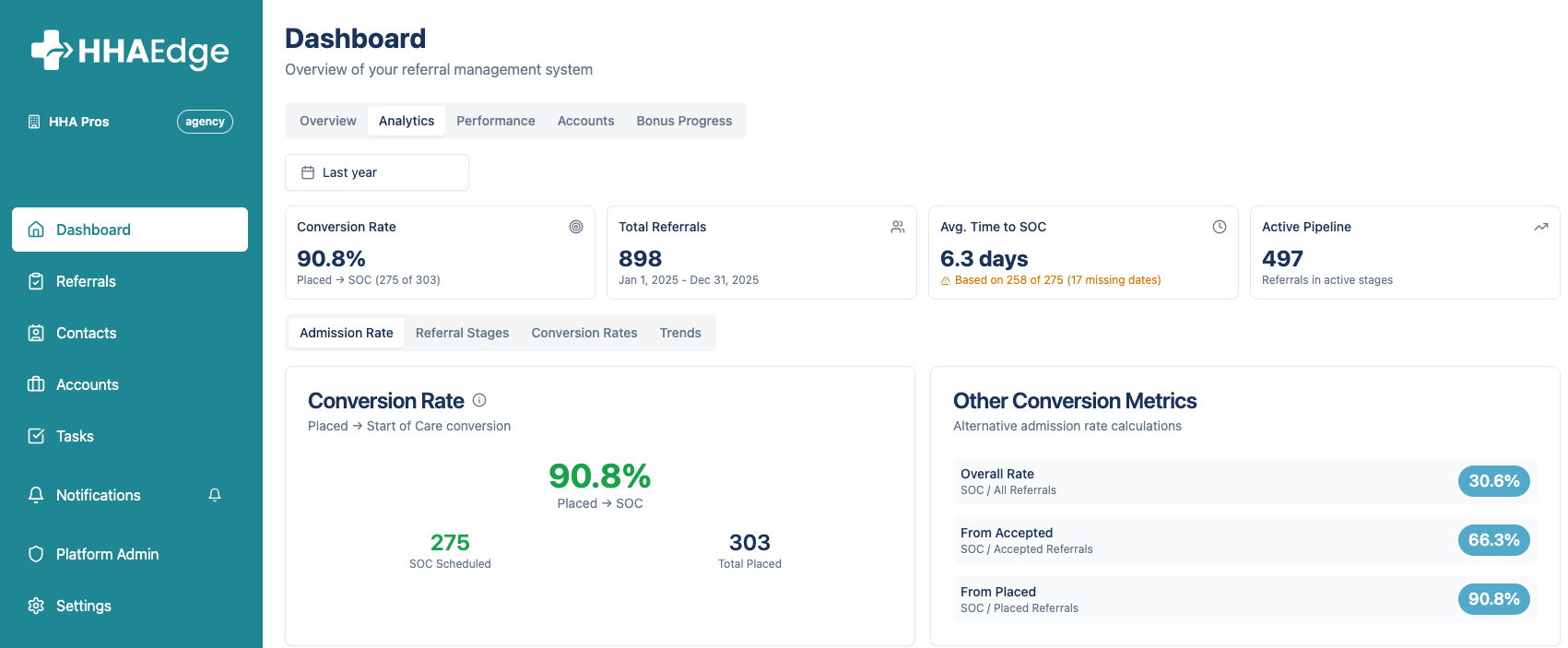
Spotting and fixing issues in your referral pipeline can transform your operations and boost efficiency. Let's dive into how you can identify and address these challenges.
Surface Referral-to-Admission Issues
The first step is to pinpoint where your process is failing. Are referrals getting lost in a sea of paperwork or emails? Perhaps delays are happening because multiple systems aren’t coordinated. Picture this: referrals buried in inboxes while patients turn to other agencies. To get started, map out your entire process from the moment a referral is received until admission. This visualization can reveal hidden delays and redundant steps.
In many cases, referrals stall due to poor communication between teams. The intake team might be overwhelmed with spreadsheets and manual tracking, leading to errors and frustration. Identifying these weak spots is crucial. Look for patterns in where errors occur or when processes slow down. Once you’ve surfaced these issues, you’ll be better positioned to create a plan that addresses them head-on.
Quantify with Key Performance Indicators
Once you've identified potential bottlenecks, it's time to measure their impact with KPIs. By using specific metrics, you can quantify how much each issue is costing in terms of time and resources. Focus on indicators like response times, referral-to-admission rates, and SOC timeliness. For example, tracking the average time from referral receipt to SOC can highlight inefficiencies.
KPIs not only show you where problems lie but also help in setting benchmarks and goals for improvement. They serve as a guide to ensure you’re on the right track. Regularly reviewing these metrics will empower you to make informed decisions and adjustments. Knowing your numbers is half the battle in optimizing your process.
Fix with Strategic Intake Workflows
Armed with data from your KPIs, you can now streamline your intake workflow strategically. Start by setting clear goals for each stage of the process. Define roles and responsibilities to eliminate confusion. A clear handoff system is essential to avoid dropped referrals. Consider implementing technology solutions like automated reminders or task assignments to keep the process moving smoothly.
Moreover, regular training sessions can ensure everyone involved understands their role and how they contribute to the overall success. Encourage a culture of accountability where everyone knows their metrics and strives to improve them. By optimizing workflows, you turn chaotic systems into well-oiled machines, enhancing both efficiency and patient satisfaction.
Tools for Pipeline Visibility

Improving visibility into your referral pipeline is key to maintaining control and ensuring smooth operations. Let’s explore the tools you need to achieve this.
Implement HIPAA-Compliant Dashboards
Creating dashboards that comply with HIPAA regulations is crucial for maintaining security while gaining insights. These dashboards provide a real-time view of your pipeline, highlighting where referrals stand and where they may be stuck. Imagine having a clear, visual representation of your entire referral process, accessible to all relevant stakeholders. This transparency can significantly reduce communication gaps and improve decision-making.
Dashboards can track essential metrics, alerting you to issues before they become bigger problems. They serve as a centralized hub for data, ensuring everyone has access to the same information. This not only enhances efficiency but also builds trust across your team. With the right dashboard, you’re never in the dark about your operations.
Streamline with EMR CRM Integration
Integrating your Electronic Medical Records (EMR) with Customer Relationship Management (CRM) systems can streamline operations. Say goodbye to manual data entry and disjointed systems. When these platforms work together, they provide a seamless flow of information from first contact to admission.
Consider how much time your team can save when they don’t have to toggle between different systems or manually enter data multiple times. Integration ensures that everyone is on the same page, reducing errors and speeding up the admissions cycle time. With the right integration, your team can focus on patient care rather than administration.
Monitor with Intake SLAs and Cadences
Setting Service Level Agreements (SLAs) and consistent cadences for your intake process establishes clear expectations. These tools ensure that each referral is handled within a set timeframe. By monitoring adherence to SLAs, you can quickly identify and address delays.
Regular cadence reviews keep your team aligned and focused on continuous improvement. This structured approach creates a culture of accountability and efficiency. When everyone knows what's expected and when it's due, processes run smoother, and you can handle more referrals without increasing stress or errors.
Protecting and Growing Your Agency
To secure your agency’s future, it’s essential to focus on partner retention, capacity management, and addressing non-admit rates.
Enhance Partner Retention and Conversion Rates
Fostering strong relationships with your referral partners is vital. They need to trust that you’ll handle their referrals efficiently. Consistently updating partners on status and outcomes can enhance trust and encourage repeat referrals.
Consider implementing a partner feedback loop to gather insights on how you can improve your service. By focusing on partner satisfaction, you not only retain existing partners but also attract new ones. Happy partners lead to a steady flow of referrals, making your agency a preferred choice.
Improve SOC Timeliness and Manage Capacity
SOC timeliness is a critical metric for agency performance. Delays here can lead to lost referrals and dissatisfied partners. By managing your capacity effectively, you can ensure timely SOC. Regularly analyze your staffing and scheduling to avoid bottlenecks.
Capacity management isn’t just about having enough staff; it’s about having the right processes and systems in place to support them. With efficient capacity management, you can handle surges without sacrificing quality, ensuring every patient receives timely care.
Address Non-Admit Rates and Weekend Coverage
Non-admit rates can significantly impact your agency’s performance. Understanding why referrals are not converting to admissions is the first step in addressing this issue. Is it due to capacity constraints, eligibility issues, or communication breakdowns? Identifying the root cause allows you to implement targeted solutions.
Weekend coverage often presents a challenge for agencies. Ensuring you have adequate staffing and streamlined processes for weekends can prevent delays and improve conversion rates. By focusing on these areas, you strengthen your agency’s reputation and ensure consistent service quality, no matter the day of the week.
By following these steps and implementing these tools, you can effectively identify and resolve bottlenecks in your home health referral pipeline, paving the way for smoother operations and higher referral-to-admission conversion rates.
TAGS
Get More Insights Like This
Join 500+ home health professionals receiving weekly strategies to grow their census