%20--%3e%3cdefs%3e%3cstyle%3e%20.st0%20{%20fill:%20%231a3159;%20}%20.st1%20{%20fill:%20%2338b387;%20}%20%3c/style%3e%3c/defs%3e%3cg%3e%3cpath%20class='st0'%20d='M140.11,318.73v115.37h-28.1v-47.49h-43.72v47.49h-28.1v-115.37h28.1v45.2h43.72v-45.2h28.1Z'/%3e%3cpath%20class='st0'%20d='M262.09,318.73v115.37h-28.1v-47.49h-43.72v47.49h-28.1v-115.37h28.1v45.2h43.72v-45.2h28.1Z'/%3e%3cpath%20class='st0'%20d='M352.79,413.72h-43.06l-6.9,20.38h-29.42l41.74-115.37h32.54l41.74,115.37h-29.75l-6.9-20.38ZM345.56,392.03l-14.3-42.24-14.14,42.24h28.44Z'/%3e%3cpath%20class='st1'%20d='M477.67,370.34c-2.74,5.15-7.12,9.34-13.14,12.58-6.03,3.23-13.75,4.85-23.18,4.85h-20.71v46.34h-18.74v-114.22h39.44c8.77,0,16.2,1.51,22.27,4.52,6.08,3.02,10.63,7.1,13.64,12.25s4.52,10.9,4.52,17.25c0,5.81-1.37,11.29-4.11,16.44ZM457.3,367.63c3.51-3.23,5.25-7.81,5.25-13.73,0-12.49-7.07-18.74-21.2-18.74h-20.71v37.31h20.71c7.12,0,12.43-1.61,15.95-4.85Z'/%3e%3cpath%20class='st1'%20d='M526.16,345.93c4.54-2.57,9.94-3.86,16.19-3.86v19.39h-4.77c-7.34,0-12.9,1.86-16.68,5.59-3.78,3.72-5.67,10.19-5.67,19.39v47.66h-18.74v-90.55h18.74v13.14c2.74-4.6,6.39-8.19,10.93-10.77Z'/%3e%3cpath%20class='st1'%20d='M572.69,429.75c-6.9-3.89-12.32-9.37-16.27-16.44-3.95-7.07-5.92-15.26-5.92-24.57s2.03-17.36,6.08-24.48c4.06-7.12,9.59-12.6,16.6-16.44s14.85-5.75,23.5-5.75,16.48,1.92,23.5,5.75c7,3.83,12.54,9.31,16.59,16.44,4.06,7.12,6.09,15.29,6.09,24.48s-2.08,17.37-6.25,24.48c-4.17,7.12-9.84,12.63-17.01,16.52-7.18,3.89-15.09,5.83-23.75,5.83s-16.27-1.94-23.18-5.83ZM609.42,415.86c4.22-2.3,7.64-5.76,10.27-10.36s3.95-10.19,3.95-16.76-1.26-12.13-3.79-16.68c-2.52-4.54-5.86-7.97-10.02-10.27s-8.66-3.45-13.47-3.45-9.29,1.15-13.4,3.45c-4.1,2.3-7.36,5.73-9.77,10.27-2.41,4.55-3.62,10.11-3.62,16.68,0,9.75,2.49,17.28,7.48,22.6,4.98,5.31,11.25,7.97,18.81,7.97,4.82,0,9.34-1.15,13.56-3.45Z'/%3e%3cpath%20class='st1'%20d='M673.32,431.72c-5.65-2.58-10.11-6.09-13.39-10.52-3.29-4.44-5.05-9.4-5.26-14.88h19.39c.34,3.84,2.16,7.04,5.51,9.62,3.34,2.58,7.53,3.87,12.57,3.87s9.34-1.01,12.24-3.04c2.91-2.03,4.36-4.63,4.36-7.81,0-3.39-1.62-5.91-4.85-7.55-3.23-1.65-8.36-3.45-15.37-5.42-6.79-1.87-12.32-3.67-16.59-5.42-4.27-1.76-7.97-4.44-11.09-8.06-3.12-3.62-4.69-8.38-4.69-14.29,0-4.82,1.42-9.23,4.27-13.23,2.85-4,6.93-7.15,12.24-9.45,5.32-2.3,11.43-3.45,18.33-3.45,10.29,0,18.6,2.6,24.9,7.8,6.3,5.21,9.66,12.3,10.1,21.28h-18.74c-.33-4.05-1.97-7.28-4.93-9.69-2.95-2.41-6.96-3.62-11.99-3.62s-8.71.93-11.34,2.8c-2.63,1.87-3.95,4.33-3.95,7.39,0,2.41.88,4.44,2.63,6.09,1.75,1.64,3.89,2.93,6.41,3.86,2.52.93,6.25,2.12,11.17,3.54,6.57,1.75,11.97,3.53,16.19,5.33,4.22,1.81,7.86,4.47,10.93,7.98,3.07,3.51,4.66,8.16,4.77,13.97,0,5.15-1.43,9.75-4.28,13.8-2.84,4.06-6.88,7.24-12.07,9.54-5.21,2.3-11.32,3.45-18.33,3.45s-13.5-1.29-19.14-3.86Z'/%3e%3c/g%3e%3cg%3e%3cpath%20class='st1'%20d='M513.49,153.9c2.16,2.56,2.16,6.3,0,8.86l-7.91,9.36-2.25,2.67-10.34,12.24-12.9,15.28c-1.76,2.08-4.35,3.29-7.08,3.29h-20.25c-1.29,0-1.98-1.5-1.15-2.49l27.48-32.54,6.8-8.05c2.05-2.42,2.05-5.96,0-8.39l-6.8-8.05-27.48-32.54c-.83-.98-.13-2.49,1.15-2.49h20.25c2.73,0,5.32,1.2,7.08,3.29l12.9,15.28,10.34,12.25,2.25,2.67,7.91,9.36Z'/%3e%3cpath%20class='st0'%20d='M457.07,168.81c1.12,0,1.72,1.3,1,2.16l-29.25,34.64c-1.7,2.02-2.64,4.57-2.64,7.21v55.51c0,9.21-7.47,16.68-16.68,16.68h-61.18c-9.21,0-16.68-7.47-16.68-16.68v-51.54c0-6.18-5.01-11.18-11.18-11.18h-51.54c-9.21,0-16.68-7.46-16.68-16.68v-61.19c0-9.21,7.47-16.68,16.68-16.68h51.54c6.18,0,11.18-5.01,11.18-11.18v-51.54c0-9.21,7.47-16.68,16.68-16.68h61.19c9.21,0,16.68,7.47,16.68,16.68v55.5c0,2.64.94,5.2,2.64,7.22l29.24,34.63c.72.85.11,2.16-1,2.16h-49.17c-7.01.25-21.82,1.79-36.05,11.92,0,0-16.13,11.48-22.07,30.08-.95,2.99-3.5,10.12,1.28,11.12,2.85.59,5.13-2.58,6.37-4.68,1.64-2.75,3.58-5.29,5.75-7.65,1.88-2.05,3.83-4.02,5.84-5.95,4.66-4.49,9.18-6.81,11.87-8.19,10.36-5.32,20.67-5.96,27.39-5.68h48.8Z'/%3e%3c/g%3e%3c/svg%3e)
Stop Admiring the Dashboard: Turn Referral Metrics into Daily Decisions That Move Admissions
Stop Admiring the Dashboard: Turn Referral Metrics into Daily Decisions That Move Admissions
Stop staring at your referral dashboard like it’s a crystal ball. That spreadsheet full of numbers won’t fix leaks or speed admissions on its own. You need a clear system: defined KPIs, decision thresholds, and a leadership rhythm that turns data into daily action. This is how you raise home health referral conversion, tighten intake workflows, and make SOC timeliness predictable every day. For more insights, visit this link.
From Data to Decisions
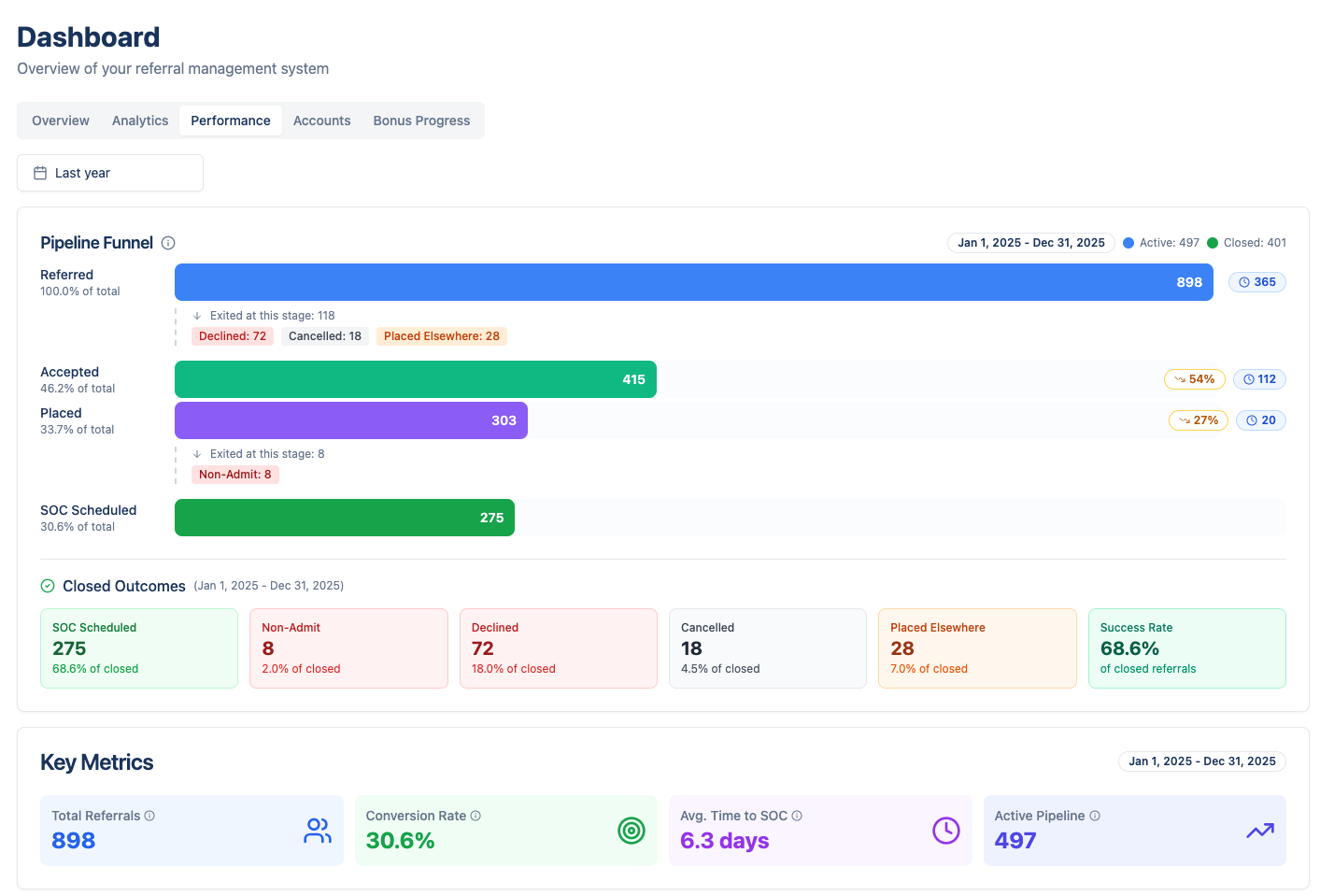
It's time to take those referral dashboard metrics and make them work for you. A system with clear KPIs and actionable steps is key to improving your operations and outcomes.
Clear KPI Definitions
Start by defining the specific KPIs that matter most in your agency. These are the numbers that will guide your actions and decisions. Without a clear understanding, you're just guessing. For example, focus on metrics like conversion rates and SOC timeliness. Knowing exactly what success looks like allows you to measure it effectively. This isn't just about numbers; it's about setting a standard for your team.
Decision Thresholds and Ownership
Once your KPIs are in place, establish decision thresholds. This means setting specific points at which action must be taken. Assign ownership to ensure accountability. When your team knows who is responsible for each action, you eliminate confusion. This clear ownership streamlines processes and enhances decision-making. Remember, clarity in roles leads to confidence in outcomes.
Action Logs and Meeting Cadence
With decisions made, keep track of actions through logs and regular meetings. Action logs help you monitor progress, while a consistent meeting schedule ensures everyone stays aligned. Weekly ops meetings create a rhythm and keep momentum. This structure prevents tasks from slipping through the cracks and keeps your team on track. Here's the key insight: an organized system leads to predictable success.
Streamlining Your Intake Workflow
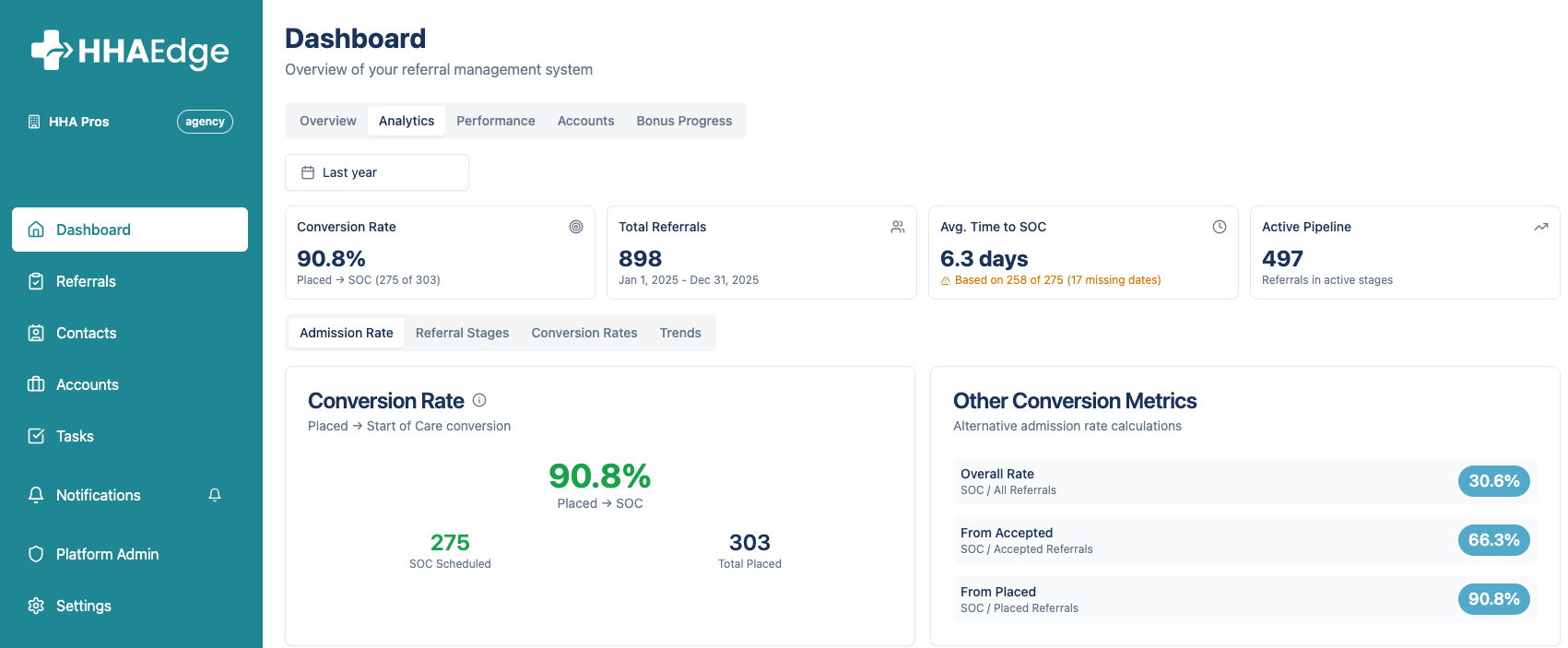
A seamless intake process is crucial for converting referrals into admissions efficiently. It's time to transform your referral dashboard into a tool for pipeline visibility.
Referral Dashboard to Pipeline Visibility
Stop viewing your dashboard as just a collection of numbers. Instead, use it to create a clear pipeline view. This approach provides real-time insights into where each referral stands. When you have visibility into your pipeline, you can anticipate and address issues before they escalate. This proactive stance reduces referral leakage and increases conversion rates. Here's an example of how data-driven decision-making can enhance home healthcare.
Standardized Processes and Intake SLAs
Creating standardized processes is essential for consistency. Define intake SLAs to set clear expectations for response times and follow-ups. Consistency in these processes ensures every team member knows their role. This leads to faster decision-making and fewer missed opportunities. By standardizing, you reduce variability and increase efficiency across the board.
EMR CRM Integration and Automation
Integrating EMR and CRM systems can automate many manual tasks, saving time and reducing errors. Automation in intake processes streamlines workflows and increases accuracy. With automated systems, you can focus on high-level tasks, leaving routine ones to technology. Learn more about the best referral intake software for home health.
Protecting and Growing Your Agency
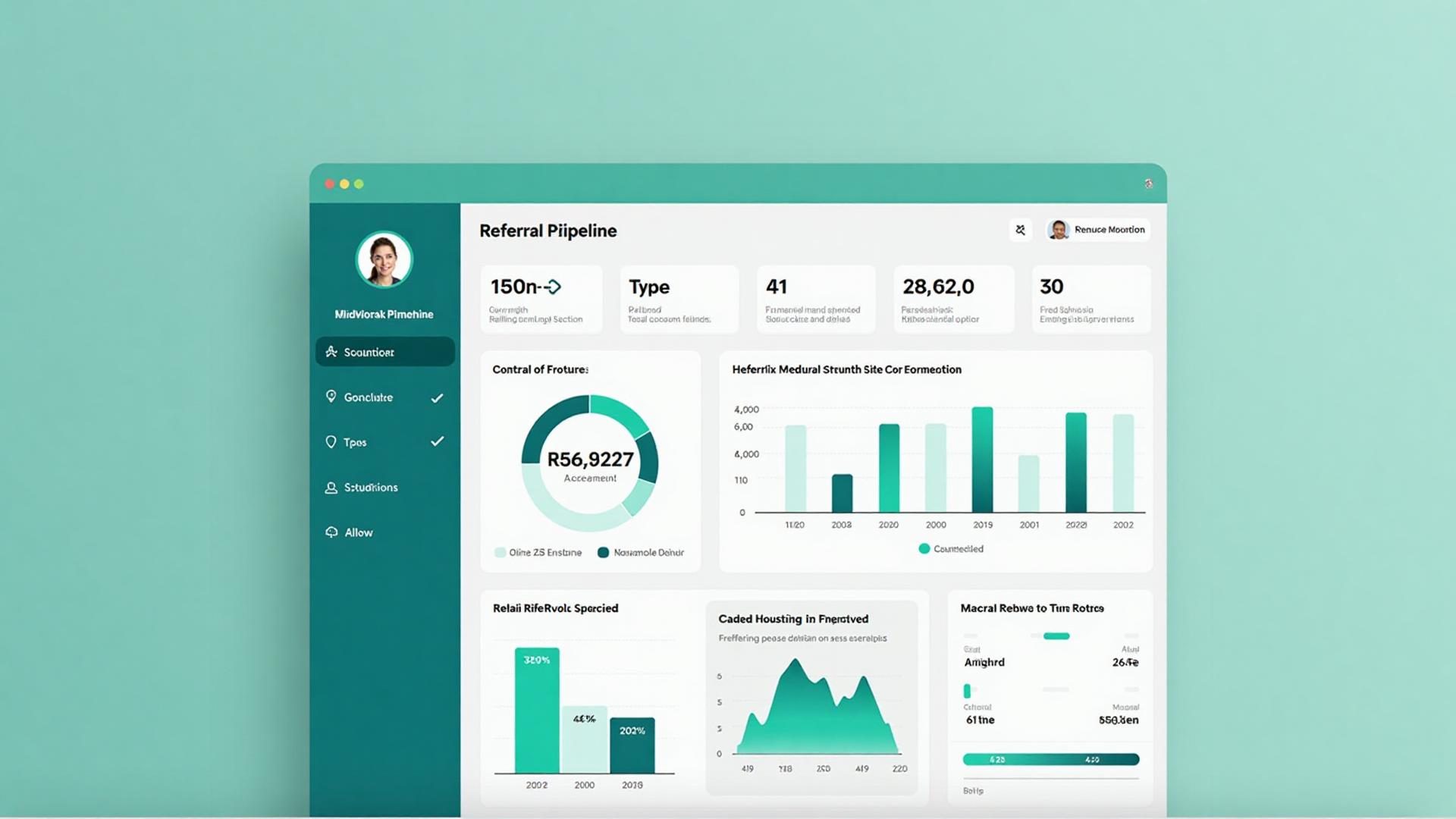
Your agency's growth relies on protecting your current operations while planning for future expansion. Let's explore how to safeguard and scale your practice.
SOC Timeliness and Capacity Forecasting
Ensuring SOC timeliness is crucial for patient satisfaction and agency efficiency. Capacity forecasting allows you to plan resources effectively. By predicting your needs, you can avoid bottlenecks and ensure timely SOCs. This forward-thinking approach keeps operations smooth and clients happy.
Reducing Referral Leakage
Referral leakage is a significant threat to your agency's growth. Identify and address the causes to prevent loss. Implementing strong follow-up processes and maintaining communication with partners can help reduce leakage. By understanding where the leaks occur, you can take actionable steps to plug them.
Market Defense and Partner Retention
To maintain your market share, defend it actively. Strengthen relationships with partners to ensure their loyalty. Regular check-ins and performance reports keep you top-of-mind. This proactive approach not only protects your current business but also opens doors to new opportunities. Discover how automated referral systems can enhance your operations.
In conclusion, transforming your referral dashboard into an actionable system benefits your agency in multiple ways. By defining KPIs, establishing clear ownership, and streamlining your intake workflow, you set the stage for growth. Protect your market share by reducing leakage and reinforcing partner relationships. When these elements align, your agency thrives.
TAGS
Get More Insights Like This
Join 500+ home health professionals receiving weekly strategies to grow their census