%20--%3e%3cdefs%3e%3cstyle%3e%20.st0%20{%20fill:%20%231a3159;%20}%20.st1%20{%20fill:%20%2338b387;%20}%20%3c/style%3e%3c/defs%3e%3cg%3e%3cpath%20class='st0'%20d='M140.11,318.73v115.37h-28.1v-47.49h-43.72v47.49h-28.1v-115.37h28.1v45.2h43.72v-45.2h28.1Z'/%3e%3cpath%20class='st0'%20d='M262.09,318.73v115.37h-28.1v-47.49h-43.72v47.49h-28.1v-115.37h28.1v45.2h43.72v-45.2h28.1Z'/%3e%3cpath%20class='st0'%20d='M352.79,413.72h-43.06l-6.9,20.38h-29.42l41.74-115.37h32.54l41.74,115.37h-29.75l-6.9-20.38ZM345.56,392.03l-14.3-42.24-14.14,42.24h28.44Z'/%3e%3cpath%20class='st1'%20d='M477.67,370.34c-2.74,5.15-7.12,9.34-13.14,12.58-6.03,3.23-13.75,4.85-23.18,4.85h-20.71v46.34h-18.74v-114.22h39.44c8.77,0,16.2,1.51,22.27,4.52,6.08,3.02,10.63,7.1,13.64,12.25s4.52,10.9,4.52,17.25c0,5.81-1.37,11.29-4.11,16.44ZM457.3,367.63c3.51-3.23,5.25-7.81,5.25-13.73,0-12.49-7.07-18.74-21.2-18.74h-20.71v37.31h20.71c7.12,0,12.43-1.61,15.95-4.85Z'/%3e%3cpath%20class='st1'%20d='M526.16,345.93c4.54-2.57,9.94-3.86,16.19-3.86v19.39h-4.77c-7.34,0-12.9,1.86-16.68,5.59-3.78,3.72-5.67,10.19-5.67,19.39v47.66h-18.74v-90.55h18.74v13.14c2.74-4.6,6.39-8.19,10.93-10.77Z'/%3e%3cpath%20class='st1'%20d='M572.69,429.75c-6.9-3.89-12.32-9.37-16.27-16.44-3.95-7.07-5.92-15.26-5.92-24.57s2.03-17.36,6.08-24.48c4.06-7.12,9.59-12.6,16.6-16.44s14.85-5.75,23.5-5.75,16.48,1.92,23.5,5.75c7,3.83,12.54,9.31,16.59,16.44,4.06,7.12,6.09,15.29,6.09,24.48s-2.08,17.37-6.25,24.48c-4.17,7.12-9.84,12.63-17.01,16.52-7.18,3.89-15.09,5.83-23.75,5.83s-16.27-1.94-23.18-5.83ZM609.42,415.86c4.22-2.3,7.64-5.76,10.27-10.36s3.95-10.19,3.95-16.76-1.26-12.13-3.79-16.68c-2.52-4.54-5.86-7.97-10.02-10.27s-8.66-3.45-13.47-3.45-9.29,1.15-13.4,3.45c-4.1,2.3-7.36,5.73-9.77,10.27-2.41,4.55-3.62,10.11-3.62,16.68,0,9.75,2.49,17.28,7.48,22.6,4.98,5.31,11.25,7.97,18.81,7.97,4.82,0,9.34-1.15,13.56-3.45Z'/%3e%3cpath%20class='st1'%20d='M673.32,431.72c-5.65-2.58-10.11-6.09-13.39-10.52-3.29-4.44-5.05-9.4-5.26-14.88h19.39c.34,3.84,2.16,7.04,5.51,9.62,3.34,2.58,7.53,3.87,12.57,3.87s9.34-1.01,12.24-3.04c2.91-2.03,4.36-4.63,4.36-7.81,0-3.39-1.62-5.91-4.85-7.55-3.23-1.65-8.36-3.45-15.37-5.42-6.79-1.87-12.32-3.67-16.59-5.42-4.27-1.76-7.97-4.44-11.09-8.06-3.12-3.62-4.69-8.38-4.69-14.29,0-4.82,1.42-9.23,4.27-13.23,2.85-4,6.93-7.15,12.24-9.45,5.32-2.3,11.43-3.45,18.33-3.45,10.29,0,18.6,2.6,24.9,7.8,6.3,5.21,9.66,12.3,10.1,21.28h-18.74c-.33-4.05-1.97-7.28-4.93-9.69-2.95-2.41-6.96-3.62-11.99-3.62s-8.71.93-11.34,2.8c-2.63,1.87-3.95,4.33-3.95,7.39,0,2.41.88,4.44,2.63,6.09,1.75,1.64,3.89,2.93,6.41,3.86,2.52.93,6.25,2.12,11.17,3.54,6.57,1.75,11.97,3.53,16.19,5.33,4.22,1.81,7.86,4.47,10.93,7.98,3.07,3.51,4.66,8.16,4.77,13.97,0,5.15-1.43,9.75-4.28,13.8-2.84,4.06-6.88,7.24-12.07,9.54-5.21,2.3-11.32,3.45-18.33,3.45s-13.5-1.29-19.14-3.86Z'/%3e%3c/g%3e%3cg%3e%3cpath%20class='st1'%20d='M513.49,153.9c2.16,2.56,2.16,6.3,0,8.86l-7.91,9.36-2.25,2.67-10.34,12.24-12.9,15.28c-1.76,2.08-4.35,3.29-7.08,3.29h-20.25c-1.29,0-1.98-1.5-1.15-2.49l27.48-32.54,6.8-8.05c2.05-2.42,2.05-5.96,0-8.39l-6.8-8.05-27.48-32.54c-.83-.98-.13-2.49,1.15-2.49h20.25c2.73,0,5.32,1.2,7.08,3.29l12.9,15.28,10.34,12.25,2.25,2.67,7.91,9.36Z'/%3e%3cpath%20class='st0'%20d='M457.07,168.81c1.12,0,1.72,1.3,1,2.16l-29.25,34.64c-1.7,2.02-2.64,4.57-2.64,7.21v55.51c0,9.21-7.47,16.68-16.68,16.68h-61.18c-9.21,0-16.68-7.47-16.68-16.68v-51.54c0-6.18-5.01-11.18-11.18-11.18h-51.54c-9.21,0-16.68-7.46-16.68-16.68v-61.19c0-9.21,7.47-16.68,16.68-16.68h51.54c6.18,0,11.18-5.01,11.18-11.18v-51.54c0-9.21,7.47-16.68,16.68-16.68h61.19c9.21,0,16.68,7.47,16.68,16.68v55.5c0,2.64.94,5.2,2.64,7.22l29.24,34.63c.72.85.11,2.16-1,2.16h-49.17c-7.01.25-21.82,1.79-36.05,11.92,0,0-16.13,11.48-22.07,30.08-.95,2.99-3.5,10.12,1.28,11.12,2.85.59,5.13-2.58,6.37-4.68,1.64-2.75,3.58-5.29,5.75-7.65,1.88-2.05,3.83-4.02,5.84-5.95,4.66-4.49,9.18-6.81,11.87-8.19,10.36-5.32,20.67-5.96,27.39-5.68h48.8Z'/%3e%3c/g%3e%3c/svg%3e)
Stop Adding Tools. Start Integrating Intake: How connected tech lifts referral-to-admission conversion
Stop Adding Tools. Start Integrating Intake: How Connected Tech Lifts Referral-to-Admission Conversion
You don’t need more software. You need a system that connects your EMR, CRM, and referral portals into one clear flow. Manual intake slows you down, leaks referrals, and leaves your team chasing information. Home health intake automation tightens handoffs, cuts referral leakage, and drives measurable gains in referral to admission conversion. Let’s show you how connected tech turns chaos into control. Learn more about AI-powered admissions.
Integrate, Don't Accumulate
In the world of home health, more tools don't always mean better results. What you need instead is a system that integrates your EMR, CRM, and referral portals into a seamless flow. This approach not only reduces chaos but also strengthens the core of your operations.
From Silos to Systems
Imagine your data working together instead of standing alone. By integrating technology, you eliminate silos, creating a unified system where information flows freely. This means less time hunting for data and more time focusing on patient care. Integration helps your team work smarter, not harder, by providing a clear view of the entire referral process.
Many agencies struggle with fragmented systems that don't communicate. This leads to lost referrals and delayed admissions. When your EMR, CRM, and referral portals talk to each other, you gain control over the intake process. A connected system is like a well-oiled machine, running smoothly and efficiently.
Tighten Handoffs with Connected Tech
Smooth transitions are crucial in healthcare. Connected technology ensures that every handoff between departments is tight and error-free. This reduces the chance of mistakes and keeps your team aligned on patient needs.
With connected systems, your staff won't have to rely on manual updates or phone calls to track patient progress. Instead, everyone has access to real-time data, which leads to quicker decision-making and improved patient outcomes. Say goodbye to the days of chasing paperwork and hello to a streamlined process.
Beyond Software: Build Systems
Software alone can't solve your problems. You need systems that support your operations and empower your team. Building systems means looking at the bigger picture: how each tool fits into your workflow and enhances your capabilities.
A well-designed system reduces reliance on any single technology. It allows for flexibility and adaptation as your needs change. By focusing on systems, not just software, you build a resilient foundation that supports growth and enhances service delivery.
Automate and Standardize
Automation and standardization are the keys to reducing manual work and improving efficiency. They help you minimize errors and ensure consistency across your operations, leading to better outcomes.
Reduce Referral Leakage
Referral leakage can be a significant problem, but automation helps plug the gaps. Automated systems capture every referral, ensuring nothing slips through the cracks. This leads to higher conversion rates and better partner relationships.
Consider the time saved when referrals are automatically logged and tracked. Your team can focus on patient care, knowing that the system handles the mundane tasks. Automation reduces errors and enhances reliability, making your intake process robust and dependable.
Role of Referral Parsing Bots
Referral parsing bots are game-changers in the intake process. They quickly extract and organize referral data, saving your team hours of manual work. This not only speeds up admissions but also reduces the chance of human error.
With parsing bots, you can trust that referrals are accurately entered and tracked. The system automatically identifies key information and presents it in an easily digestible format. This means your team can make informed decisions faster, improving overall efficiency.
Streamline with Intake Workflow Standardization
Standardizing your intake workflow brings consistency and clarity. When everyone follows the same process, you reduce confusion and ensure each patient receives the same high level of care. This consistency enhances your reputation and boosts patient satisfaction.
Standardized workflows also make it easier to train new staff. With clear guidelines and processes, your team can hit the ground running. This helps maintain a steady intake flow and reduces the learning curve for new employees.
Elevate Conversion Rates
Improving conversion rates is about more than just numbers; it's about providing better care and achieving operational excellence. By focusing on key areas, you can see significant improvements.
Boost SOC Timeliness
Timely starts of care (SOC) are crucial for patient satisfaction and operational efficiency. By streamlining your intake process, you ensure patients receive care when they need it. This not only improves outcomes but also reinforces trust with your partners.
Timeliness is a critical metric that impacts your agency's reputation. By focusing on improving SOC timeliness, you demonstrate commitment to quality care and operational excellence. This leads to stronger relationships with referral sources and increased business opportunities.
KPI Dashboards for Home Health
KPI dashboards provide real-time insights into your operations. They help you identify bottlenecks and track progress toward goals. With clear data at your fingertips, you can make informed decisions that drive growth.
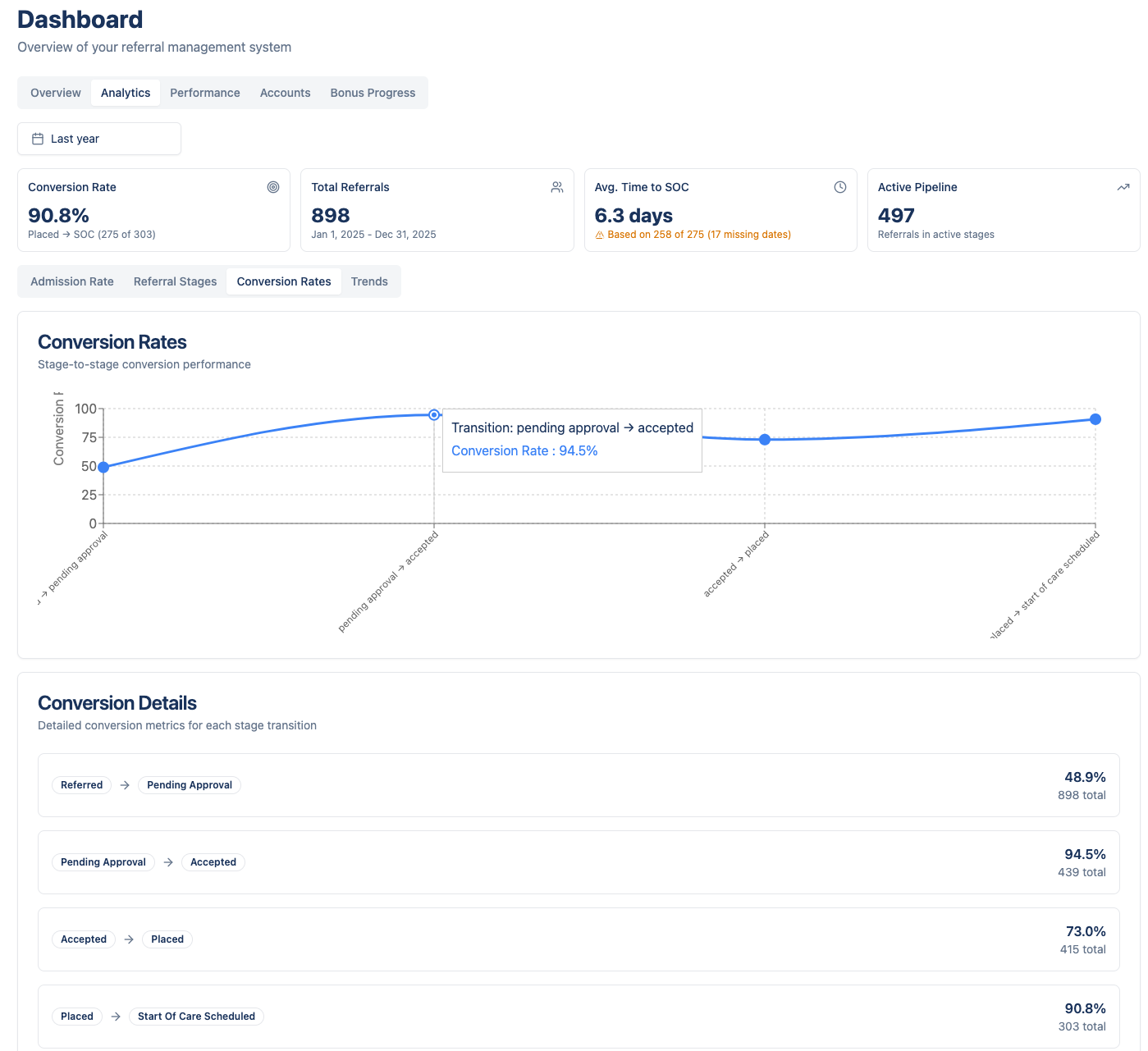
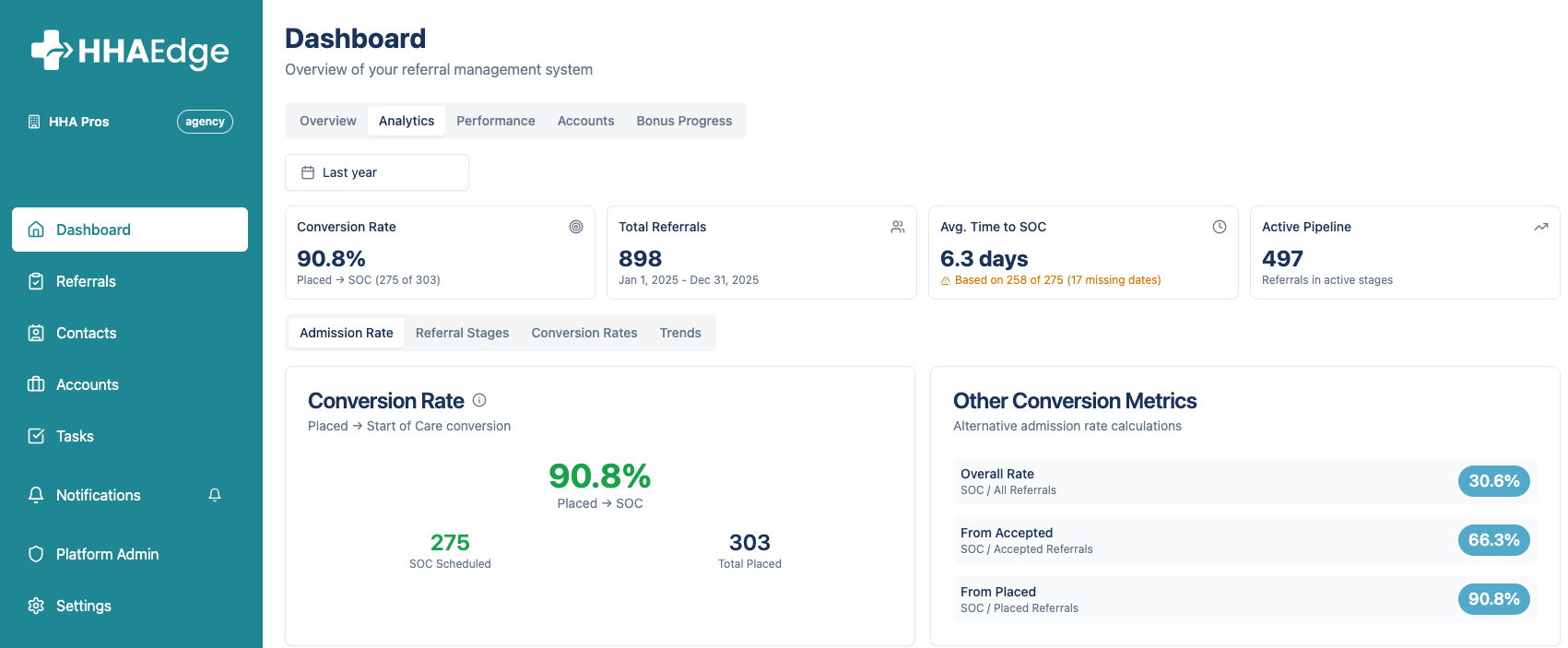
Dashboards allow you to monitor key metrics such as referral conversion rates, SOC timeliness, and partner retention. This visibility helps you stay ahead of potential issues and make proactive changes to improve performance. A well-designed dashboard is a powerful tool for any home health agency.
Achieve Operational Resilience
Operational resilience is the ability to adapt and thrive in the face of challenges. By focusing on system integration and process improvement, you build a resilient foundation that supports growth and stability.
Resilience means being prepared for unexpected changes and having the ability to bounce back quickly. With the right systems in place, you can handle surges in demand, staffing challenges, and other disruptions with confidence. Building operational resilience ensures your agency remains strong and competitive in a dynamic industry.
By integrating technology and streamlining processes, home health agencies can achieve significant improvements in efficiency, conversion rates, and patient outcomes. Embrace these changes to build a stronger, more resilient operation.
TAGS
Get More Insights Like This
Join 500+ home health professionals receiving weekly strategies to grow their census