%20--%3e%3cdefs%3e%3cstyle%3e%20.st0%20{%20fill:%20%231a3159;%20}%20.st1%20{%20fill:%20%2338b387;%20}%20%3c/style%3e%3c/defs%3e%3cg%3e%3cpath%20class='st0'%20d='M140.11,318.73v115.37h-28.1v-47.49h-43.72v47.49h-28.1v-115.37h28.1v45.2h43.72v-45.2h28.1Z'/%3e%3cpath%20class='st0'%20d='M262.09,318.73v115.37h-28.1v-47.49h-43.72v47.49h-28.1v-115.37h28.1v45.2h43.72v-45.2h28.1Z'/%3e%3cpath%20class='st0'%20d='M352.79,413.72h-43.06l-6.9,20.38h-29.42l41.74-115.37h32.54l41.74,115.37h-29.75l-6.9-20.38ZM345.56,392.03l-14.3-42.24-14.14,42.24h28.44Z'/%3e%3cpath%20class='st1'%20d='M477.67,370.34c-2.74,5.15-7.12,9.34-13.14,12.58-6.03,3.23-13.75,4.85-23.18,4.85h-20.71v46.34h-18.74v-114.22h39.44c8.77,0,16.2,1.51,22.27,4.52,6.08,3.02,10.63,7.1,13.64,12.25s4.52,10.9,4.52,17.25c0,5.81-1.37,11.29-4.11,16.44ZM457.3,367.63c3.51-3.23,5.25-7.81,5.25-13.73,0-12.49-7.07-18.74-21.2-18.74h-20.71v37.31h20.71c7.12,0,12.43-1.61,15.95-4.85Z'/%3e%3cpath%20class='st1'%20d='M526.16,345.93c4.54-2.57,9.94-3.86,16.19-3.86v19.39h-4.77c-7.34,0-12.9,1.86-16.68,5.59-3.78,3.72-5.67,10.19-5.67,19.39v47.66h-18.74v-90.55h18.74v13.14c2.74-4.6,6.39-8.19,10.93-10.77Z'/%3e%3cpath%20class='st1'%20d='M572.69,429.75c-6.9-3.89-12.32-9.37-16.27-16.44-3.95-7.07-5.92-15.26-5.92-24.57s2.03-17.36,6.08-24.48c4.06-7.12,9.59-12.6,16.6-16.44s14.85-5.75,23.5-5.75,16.48,1.92,23.5,5.75c7,3.83,12.54,9.31,16.59,16.44,4.06,7.12,6.09,15.29,6.09,24.48s-2.08,17.37-6.25,24.48c-4.17,7.12-9.84,12.63-17.01,16.52-7.18,3.89-15.09,5.83-23.75,5.83s-16.27-1.94-23.18-5.83ZM609.42,415.86c4.22-2.3,7.64-5.76,10.27-10.36s3.95-10.19,3.95-16.76-1.26-12.13-3.79-16.68c-2.52-4.54-5.86-7.97-10.02-10.27s-8.66-3.45-13.47-3.45-9.29,1.15-13.4,3.45c-4.1,2.3-7.36,5.73-9.77,10.27-2.41,4.55-3.62,10.11-3.62,16.68,0,9.75,2.49,17.28,7.48,22.6,4.98,5.31,11.25,7.97,18.81,7.97,4.82,0,9.34-1.15,13.56-3.45Z'/%3e%3cpath%20class='st1'%20d='M673.32,431.72c-5.65-2.58-10.11-6.09-13.39-10.52-3.29-4.44-5.05-9.4-5.26-14.88h19.39c.34,3.84,2.16,7.04,5.51,9.62,3.34,2.58,7.53,3.87,12.57,3.87s9.34-1.01,12.24-3.04c2.91-2.03,4.36-4.63,4.36-7.81,0-3.39-1.62-5.91-4.85-7.55-3.23-1.65-8.36-3.45-15.37-5.42-6.79-1.87-12.32-3.67-16.59-5.42-4.27-1.76-7.97-4.44-11.09-8.06-3.12-3.62-4.69-8.38-4.69-14.29,0-4.82,1.42-9.23,4.27-13.23,2.85-4,6.93-7.15,12.24-9.45,5.32-2.3,11.43-3.45,18.33-3.45,10.29,0,18.6,2.6,24.9,7.8,6.3,5.21,9.66,12.3,10.1,21.28h-18.74c-.33-4.05-1.97-7.28-4.93-9.69-2.95-2.41-6.96-3.62-11.99-3.62s-8.71.93-11.34,2.8c-2.63,1.87-3.95,4.33-3.95,7.39,0,2.41.88,4.44,2.63,6.09,1.75,1.64,3.89,2.93,6.41,3.86,2.52.93,6.25,2.12,11.17,3.54,6.57,1.75,11.97,3.53,16.19,5.33,4.22,1.81,7.86,4.47,10.93,7.98,3.07,3.51,4.66,8.16,4.77,13.97,0,5.15-1.43,9.75-4.28,13.8-2.84,4.06-6.88,7.24-12.07,9.54-5.21,2.3-11.32,3.45-18.33,3.45s-13.5-1.29-19.14-3.86Z'/%3e%3c/g%3e%3cg%3e%3cpath%20class='st1'%20d='M513.49,153.9c2.16,2.56,2.16,6.3,0,8.86l-7.91,9.36-2.25,2.67-10.34,12.24-12.9,15.28c-1.76,2.08-4.35,3.29-7.08,3.29h-20.25c-1.29,0-1.98-1.5-1.15-2.49l27.48-32.54,6.8-8.05c2.05-2.42,2.05-5.96,0-8.39l-6.8-8.05-27.48-32.54c-.83-.98-.13-2.49,1.15-2.49h20.25c2.73,0,5.32,1.2,7.08,3.29l12.9,15.28,10.34,12.25,2.25,2.67,7.91,9.36Z'/%3e%3cpath%20class='st0'%20d='M457.07,168.81c1.12,0,1.72,1.3,1,2.16l-29.25,34.64c-1.7,2.02-2.64,4.57-2.64,7.21v55.51c0,9.21-7.47,16.68-16.68,16.68h-61.18c-9.21,0-16.68-7.47-16.68-16.68v-51.54c0-6.18-5.01-11.18-11.18-11.18h-51.54c-9.21,0-16.68-7.46-16.68-16.68v-61.19c0-9.21,7.47-16.68,16.68-16.68h51.54c6.18,0,11.18-5.01,11.18-11.18v-51.54c0-9.21,7.47-16.68,16.68-16.68h61.19c9.21,0,16.68,7.47,16.68,16.68v55.5c0,2.64.94,5.2,2.64,7.22l29.24,34.63c.72.85.11,2.16-1,2.16h-49.17c-7.01.25-21.82,1.79-36.05,11.92,0,0-16.13,11.48-22.07,30.08-.95,2.99-3.5,10.12,1.28,11.12,2.85.59,5.13-2.58,6.37-4.68,1.64-2.75,3.58-5.29,5.75-7.65,1.88-2.05,3.83-4.02,5.84-5.95,4.66-4.49,9.18-6.81,11.87-8.19,10.36-5.32,20.67-5.96,27.39-5.68h48.8Z'/%3e%3c/g%3e%3c/svg%3e)
Referral Partner Retention in Home Health: The System That Protects Your Market Share
Referral Partner Retention in Home Health: The System That Protects Your Market Share
You’ve lost referrals this quarter. Your intake process feels patchy, and your best partners are quietly drifting away. This isn’t just bad luck - it’s a system problem. Home health referral partner retention depends on tight intake workflows, clear SLAs, and real accountability. In this post, you’ll see how a structured partner retention system plugs leaks, boosts conversion, and locks down your market share. For more insights, visit this link.
Protecting Home Health Market Share
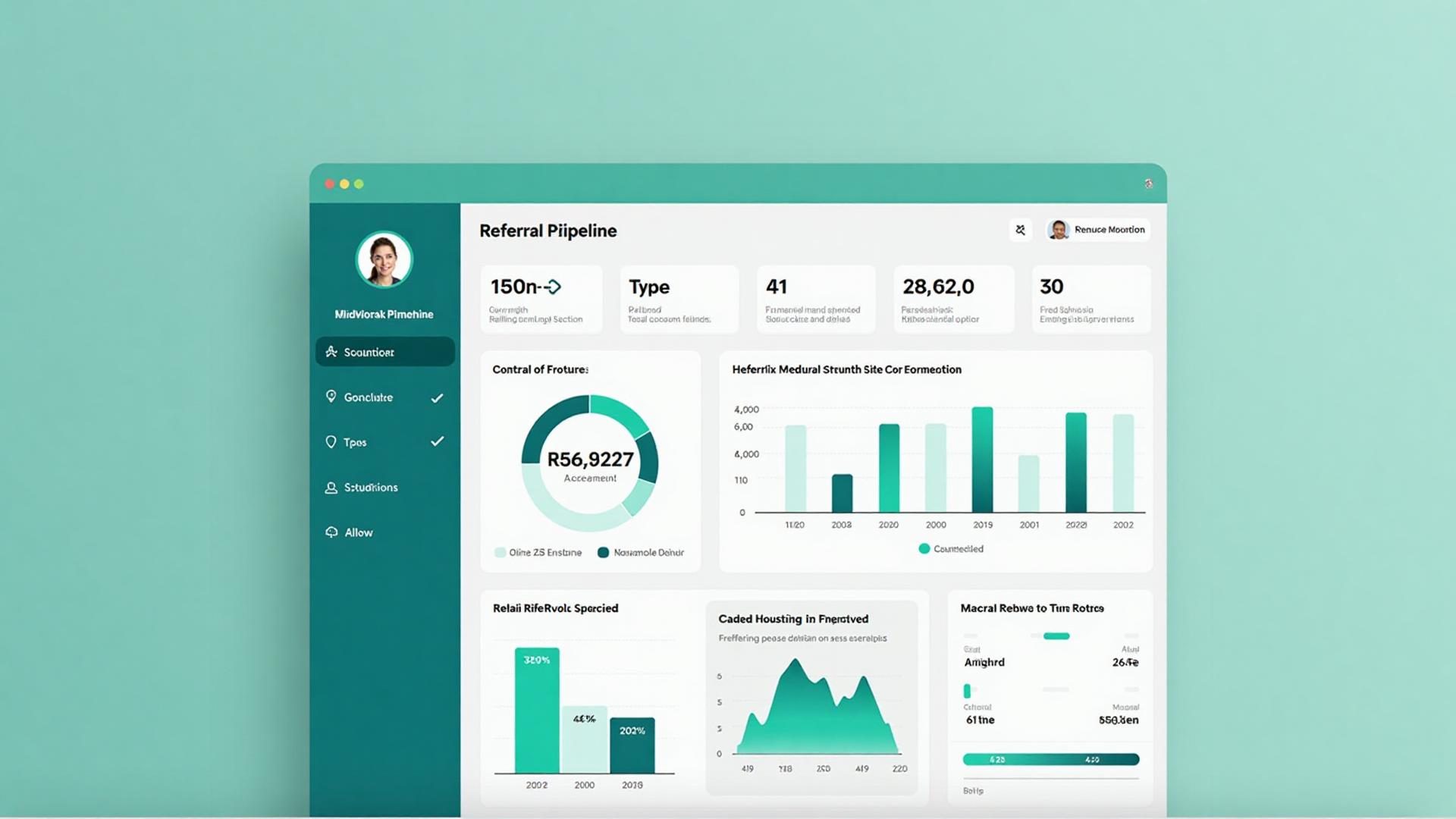
Referral Partner Retention Strategies
You've probably noticed that keeping referral partners happy isn't just about results; it's about reliability. Partners want to know they can count on you every time. That's why a system built on standardized processes is key. This system ensures that every referral is handled with precision, reducing errors and building trust.
The first step in retaining partners is to assure them that their referrals will be processed quickly and correctly. This means having a clear intake process that everyone understands. When partners see consistency, they feel confident in continuing to send referrals your way. Consistent communication is also crucial. By keeping partners updated, you build a bridge of trust that prevents them from looking elsewhere.
Plugging Referral Leakage
Losing referrals is like watching potential growth slip through your fingers. The good news is that plugging these leaks isn't as hard as it might seem. It starts with identifying where the leaks are. Often, it's in the handoffs - where one person's responsibility ends and another's begins.
To stop leakage, map out your entire referral process. Look closely at each step and ask yourself: "Where can things go wrong?" Once you've pinpointed trouble spots, it's time to tighten up those areas. This might mean clarifying roles or setting up checks and balances to catch mistakes before they become problems.
Standardizing Intake Workflows
A smooth intake process is the backbone of your referral system. It ensures everything runs like clockwork, from the moment a referral comes in to when care begins. Standardizing this workflow is about creating a routine that everyone follows.
When your team knows exactly what to do with each referral, it cuts down on confusion and speeds up the process. It also makes training new staff easier, since they have a clear path to follow. This consistency doesn’t just help your team - it shows your partners that you're organized and dependable.
Building a Defensible System
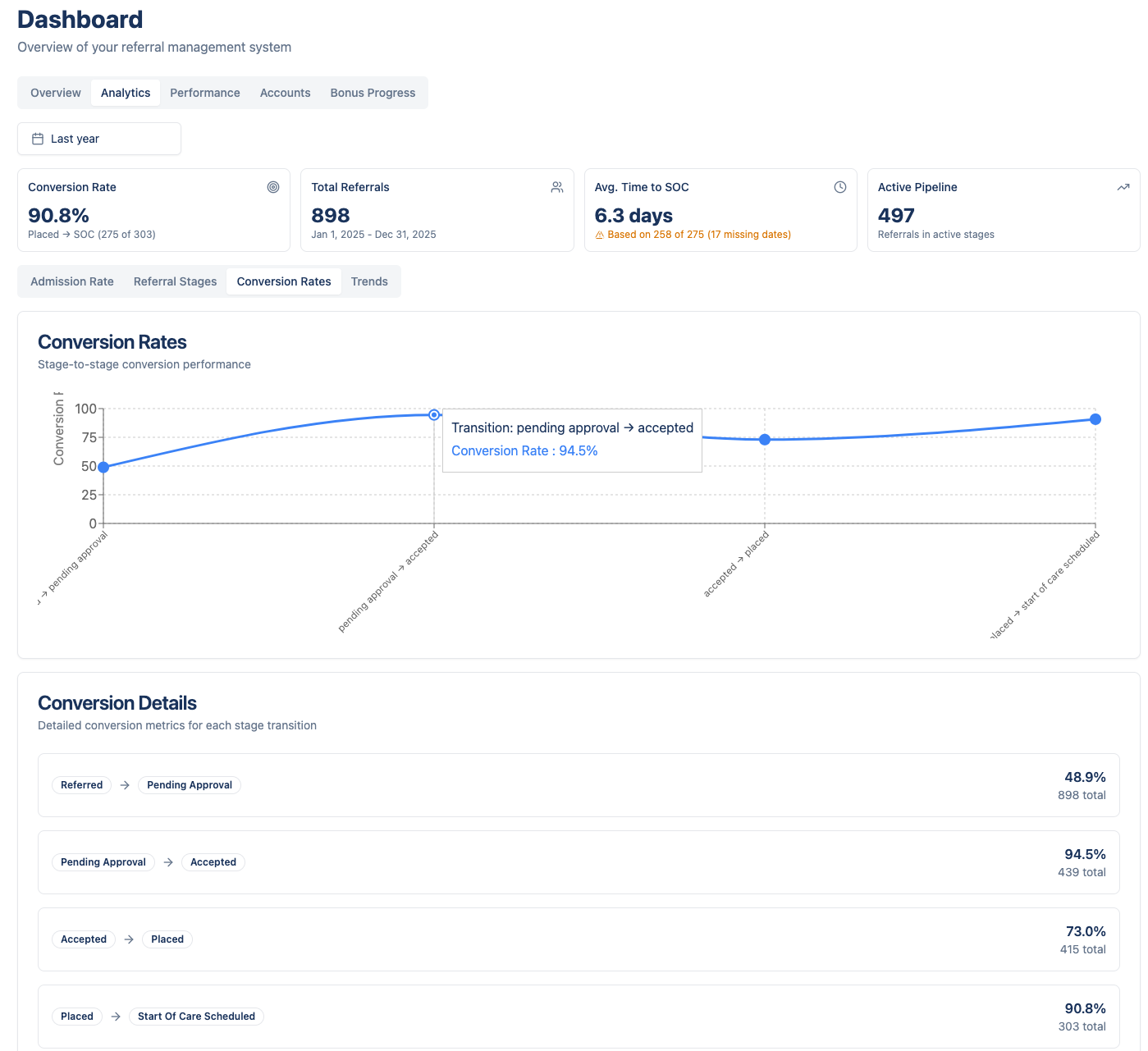
Referral Conversion Rate Boosters
Boosting your referral conversion rate starts with understanding the numbers. If you know your baseline, you can measure improvement. One way to boost these numbers is by responding faster. Quick responses show partners that you value their referrals. Another strategy is to personalize your approach. Tailor your communication to the unique needs of each partner, making them feel seen and appreciated.
Regularly review your processes to find new ways to improve. Small tweaks can lead to significant gains. For example, if you notice delays in communication, perhaps a simple script or template could speed things up. Consistently refining your approach will lead to higher conversion rates over time.
Importance of Compliance in Intake
Compliance isn't just about following rules; it's about ensuring that every referral is handled with care and precision. When compliance is embedded into your intake process, it protects your agency from legal issues and builds trust with partners.
A compliant system is one where every step is documented and reviewed. This transparency reassures partners that their referrals are in good hands. By making compliance a priority, you're not only protecting your agency, but you're also enhancing your reputation in the industry.
Intake SLAs and Handoffs
Service Level Agreements (SLAs) set the standard for how quickly and effectively referrals are handled. Clear SLAs help manage expectations and provide a benchmark for performance. They ensure that everyone knows what is expected and can be held accountable.
Handoffs are critical moments in the referral process. Each handoff should be seamless, with clear communication about what needs to happen next. By standardizing these transitions, you reduce the risk of errors and delays, keeping the process running smoothly.
Tools for Success
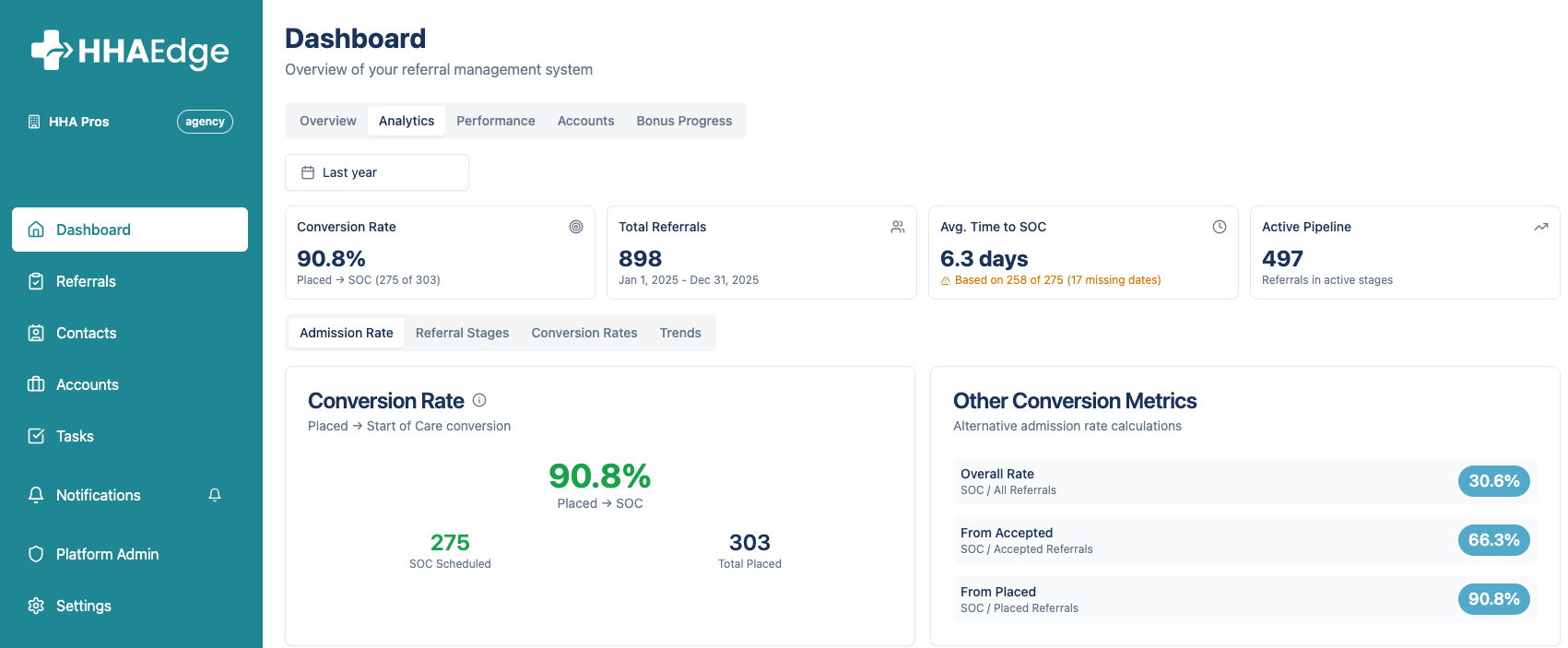
Partner Report Card Template
A partner report card is a tool that helps you provide feedback to your referral partners. It shows them how well their referrals are being handled and highlights areas for improvement. This transparency strengthens relationships and encourages ongoing collaboration.
These report cards can include metrics like response times and conversion rates. By sharing this data, you demonstrate your commitment to transparency and continuous improvement. It's a simple yet powerful way to show partners that you're serious about maintaining high standards.
Home Health Governance Cadence
Establishing a governance cadence means setting regular times to review performance, discuss challenges, and plan improvements. This routine ensures that everyone stays on track and that issues are addressed promptly.
A solid governance cadence includes weekly check-ins and quarterly reviews. These meetings provide an opportunity for open dialogue and foster a culture of accountability. By keeping everyone aligned, you ensure that your agency continues to deliver high-quality care.
EMR CRM Integration Benefits
Integrating your Electronic Medical Record (EMR) system with Customer Relationship Management (CRM) tools can transform your operations. This integration provides a unified view of every referral, improving decision-making and tracking.
With integrated systems, you reduce data silos and ensure that information flows seamlessly between teams. This leads to faster response times and a more cohesive approach to care. Ultimately, it makes your agency more efficient and positions you as a leader in the industry.
By implementing these strategies and tools, you can create a robust system that not only retains referral partners but also strengthens your market position. This system ensures that every referral is treated with the utmost care and precision, building a foundation for sustainable growth.
TAGS
Get More Insights Like This
Join 500+ home health professionals receiving weekly strategies to grow their census