%20--%3e%3cdefs%3e%3cstyle%3e%20.st0%20{%20fill:%20%231a3159;%20}%20.st1%20{%20fill:%20%2338b387;%20}%20%3c/style%3e%3c/defs%3e%3cg%3e%3cpath%20class='st0'%20d='M140.11,318.73v115.37h-28.1v-47.49h-43.72v47.49h-28.1v-115.37h28.1v45.2h43.72v-45.2h28.1Z'/%3e%3cpath%20class='st0'%20d='M262.09,318.73v115.37h-28.1v-47.49h-43.72v47.49h-28.1v-115.37h28.1v45.2h43.72v-45.2h28.1Z'/%3e%3cpath%20class='st0'%20d='M352.79,413.72h-43.06l-6.9,20.38h-29.42l41.74-115.37h32.54l41.74,115.37h-29.75l-6.9-20.38ZM345.56,392.03l-14.3-42.24-14.14,42.24h28.44Z'/%3e%3cpath%20class='st1'%20d='M477.67,370.34c-2.74,5.15-7.12,9.34-13.14,12.58-6.03,3.23-13.75,4.85-23.18,4.85h-20.71v46.34h-18.74v-114.22h39.44c8.77,0,16.2,1.51,22.27,4.52,6.08,3.02,10.63,7.1,13.64,12.25s4.52,10.9,4.52,17.25c0,5.81-1.37,11.29-4.11,16.44ZM457.3,367.63c3.51-3.23,5.25-7.81,5.25-13.73,0-12.49-7.07-18.74-21.2-18.74h-20.71v37.31h20.71c7.12,0,12.43-1.61,15.95-4.85Z'/%3e%3cpath%20class='st1'%20d='M526.16,345.93c4.54-2.57,9.94-3.86,16.19-3.86v19.39h-4.77c-7.34,0-12.9,1.86-16.68,5.59-3.78,3.72-5.67,10.19-5.67,19.39v47.66h-18.74v-90.55h18.74v13.14c2.74-4.6,6.39-8.19,10.93-10.77Z'/%3e%3cpath%20class='st1'%20d='M572.69,429.75c-6.9-3.89-12.32-9.37-16.27-16.44-3.95-7.07-5.92-15.26-5.92-24.57s2.03-17.36,6.08-24.48c4.06-7.12,9.59-12.6,16.6-16.44s14.85-5.75,23.5-5.75,16.48,1.92,23.5,5.75c7,3.83,12.54,9.31,16.59,16.44,4.06,7.12,6.09,15.29,6.09,24.48s-2.08,17.37-6.25,24.48c-4.17,7.12-9.84,12.63-17.01,16.52-7.18,3.89-15.09,5.83-23.75,5.83s-16.27-1.94-23.18-5.83ZM609.42,415.86c4.22-2.3,7.64-5.76,10.27-10.36s3.95-10.19,3.95-16.76-1.26-12.13-3.79-16.68c-2.52-4.54-5.86-7.97-10.02-10.27s-8.66-3.45-13.47-3.45-9.29,1.15-13.4,3.45c-4.1,2.3-7.36,5.73-9.77,10.27-2.41,4.55-3.62,10.11-3.62,16.68,0,9.75,2.49,17.28,7.48,22.6,4.98,5.31,11.25,7.97,18.81,7.97,4.82,0,9.34-1.15,13.56-3.45Z'/%3e%3cpath%20class='st1'%20d='M673.32,431.72c-5.65-2.58-10.11-6.09-13.39-10.52-3.29-4.44-5.05-9.4-5.26-14.88h19.39c.34,3.84,2.16,7.04,5.51,9.62,3.34,2.58,7.53,3.87,12.57,3.87s9.34-1.01,12.24-3.04c2.91-2.03,4.36-4.63,4.36-7.81,0-3.39-1.62-5.91-4.85-7.55-3.23-1.65-8.36-3.45-15.37-5.42-6.79-1.87-12.32-3.67-16.59-5.42-4.27-1.76-7.97-4.44-11.09-8.06-3.12-3.62-4.69-8.38-4.69-14.29,0-4.82,1.42-9.23,4.27-13.23,2.85-4,6.93-7.15,12.24-9.45,5.32-2.3,11.43-3.45,18.33-3.45,10.29,0,18.6,2.6,24.9,7.8,6.3,5.21,9.66,12.3,10.1,21.28h-18.74c-.33-4.05-1.97-7.28-4.93-9.69-2.95-2.41-6.96-3.62-11.99-3.62s-8.71.93-11.34,2.8c-2.63,1.87-3.95,4.33-3.95,7.39,0,2.41.88,4.44,2.63,6.09,1.75,1.64,3.89,2.93,6.41,3.86,2.52.93,6.25,2.12,11.17,3.54,6.57,1.75,11.97,3.53,16.19,5.33,4.22,1.81,7.86,4.47,10.93,7.98,3.07,3.51,4.66,8.16,4.77,13.97,0,5.15-1.43,9.75-4.28,13.8-2.84,4.06-6.88,7.24-12.07,9.54-5.21,2.3-11.32,3.45-18.33,3.45s-13.5-1.29-19.14-3.86Z'/%3e%3c/g%3e%3cg%3e%3cpath%20class='st1'%20d='M513.49,153.9c2.16,2.56,2.16,6.3,0,8.86l-7.91,9.36-2.25,2.67-10.34,12.24-12.9,15.28c-1.76,2.08-4.35,3.29-7.08,3.29h-20.25c-1.29,0-1.98-1.5-1.15-2.49l27.48-32.54,6.8-8.05c2.05-2.42,2.05-5.96,0-8.39l-6.8-8.05-27.48-32.54c-.83-.98-.13-2.49,1.15-2.49h20.25c2.73,0,5.32,1.2,7.08,3.29l12.9,15.28,10.34,12.25,2.25,2.67,7.91,9.36Z'/%3e%3cpath%20class='st0'%20d='M457.07,168.81c1.12,0,1.72,1.3,1,2.16l-29.25,34.64c-1.7,2.02-2.64,4.57-2.64,7.21v55.51c0,9.21-7.47,16.68-16.68,16.68h-61.18c-9.21,0-16.68-7.47-16.68-16.68v-51.54c0-6.18-5.01-11.18-11.18-11.18h-51.54c-9.21,0-16.68-7.46-16.68-16.68v-61.19c0-9.21,7.47-16.68,16.68-16.68h51.54c6.18,0,11.18-5.01,11.18-11.18v-51.54c0-9.21,7.47-16.68,16.68-16.68h61.19c9.21,0,16.68,7.47,16.68,16.68v55.5c0,2.64.94,5.2,2.64,7.22l29.24,34.63c.72.85.11,2.16-1,2.16h-49.17c-7.01.25-21.82,1.79-36.05,11.92,0,0-16.13,11.48-22.07,30.08-.95,2.99-3.5,10.12,1.28,11.12,2.85.59,5.13-2.58,6.37-4.68,1.64-2.75,3.58-5.29,5.75-7.65,1.88-2.05,3.83-4.02,5.84-5.95,4.66-4.49,9.18-6.81,11.87-8.19,10.36-5.32,20.67-5.96,27.39-5.68h48.8Z'/%3e%3c/g%3e%3c/svg%3e)
How to Build a Home-Health Intake Dashboard Leadership Will Actually Use
How to Build a Home-Health Intake Dashboard Leadership Will Actually Use
Most home health intake dashboards gather dust because they don’t speak leadership’s language. Your leaders need clear referral-to-admission insight - not noise. This guide lays out the step-by-step blueprint to build a home health intake dashboard that drives action: the right intake KPIs, role-based views, a trusted data model, smart alerts, and a governance cadence that sticks. Get ready to manage by dashboard, not anecdotes. Learn more here.
Building a Home Health Intake Dashboard
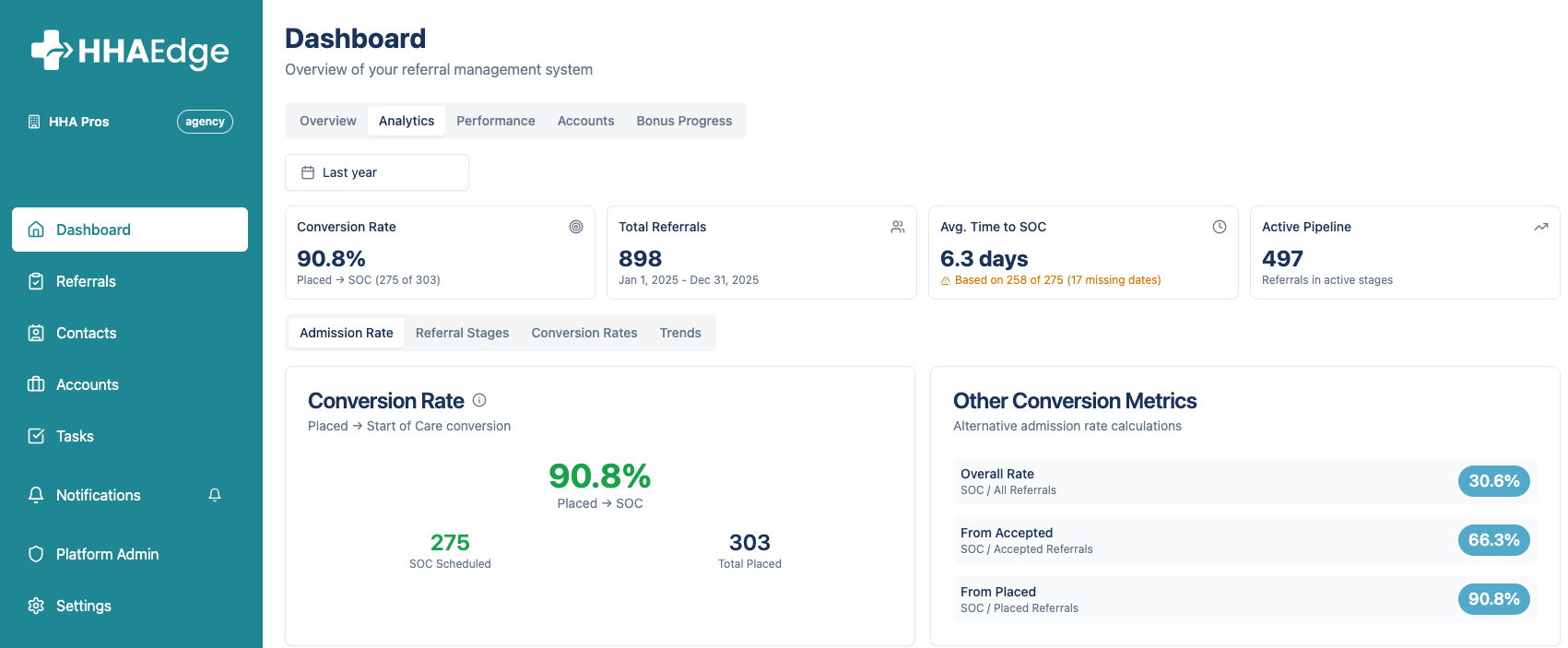
Creating a dashboard that leadership will actually use is a game-changer. It starts with understanding what metrics truly matter.
Key Metrics for Success
The right metrics can make or break your dashboard. Start by identifying the intake KPIs that align with your agency's goals. You need metrics that show progress from referral to admission. Focus on conversion rates, time-to-admission, and referral leakage.
Set targets that everyone understands. For instance, aim for a 15% improvement in referral conversion over the next quarter. This clarity will guide your team and provide a benchmark for success. When you measure what matters, you make informed decisions that drive growth.
Designing Role-Based Views
Role-based views ensure every team member sees what they need. Tailor dashboards for intake coordinators, administrators, and leadership. Each role has unique needs.
For coordinators, focus on daily tasks like pending referrals and follow-ups. Administrators need to see broader metrics such as monthly conversion rates. Leaders benefit from high-level views that highlight trends and potential bottlenecks. By customizing views, you empower your team to take action with confidence.
Source-of-Truth Data Model
A reliable data model is your foundation. It's crucial for maintaining consistency across the board. Use tools like WellSky Kinnser or AlayaCare Axxess to integrate your data sources.
Ensure your model pulls from all relevant systems: EMRs, CRMs, and referral portals. A unified data source reduces discrepancies and builds trust in your metrics. When everyone operates from the same playbook, decision-making becomes seamless.
Streamlining Dashboard Functionality
With your foundation set, it's time to streamline functionality. This ensures your team can act swiftly based on the data presented.
Setting Up Alerts and Notifications
Alerts keep your team proactive. Set up notifications based on specific triggers, like a referral pending for over 24 hours. These alerts should be simple yet effective, nudging the right team member to take action.
Prioritize alerts that reduce referral leakage or improve SOC timeliness. The goal is to catch issues before they escalate. When alerts are actionable, your team stays ahead of potential problems.
Establishing a Governance Cadence
Governance cadence is about rhythm. It's the practice of regular check-ins and reviews. Establish weekly meetings to discuss dashboard insights and progress.
Create a structure: weekly ops meetings, biweekly executive reviews, and quarterly deep dives. This ensures everyone stays aligned and accountable. When governance becomes routine, it fosters a culture of continuous improvement.
Ensuring HIPAA Compliance
HIPAA compliance is non-negotiable. Your dashboard must protect patient data at all costs. Use HIPAA-compliant tools to build your dashboard, ensuring encryption and secure access controls.
Regular audits can help you identify vulnerabilities. Compliance is about safeguarding trust with patients and partners. By prioritizing security, you protect your agency's reputation and integrity.
Enhancing Growth with System Integration
System integration is the key to unlocking your dashboard's full potential. It streamlines processes and enhances growth.
EMR and CRM Integration Strategies
Integrating EMR and CRM systems, like Salesforce or HubSpot, with your dashboard offers a seamless flow of information. This integration reduces data entry errors and enhances real-time decision-making.
Consider using APIs to connect systems, ensuring data flows smoothly. When systems talk to each other, your team spends less time on admin work and more on patient care.
Monitoring Conversion Rates and Leakage
Tracking conversion rates and identifying referral leakage is crucial. Use your dashboard to monitor these metrics closely.
Set up filters to track conversion by source or referral type. This helps you pinpoint where leaks occur and address them promptly. By keeping an eye on these numbers, you protect your agency's growth potential.
Improving Partner Retention and SOC Timeliness
Strong partner relationships are essential for sustained growth. Use your dashboard to track partner retention and SOC timeliness.
Regularly review metrics with partners, showing them the value you provide. This transparency strengthens relationships and encourages repeat referrals. When partners trust you, they stick around, reducing the risk of losing referrals to competitors.
By following these steps, you create a dashboard that not only meets leadership's needs but also drives action across your organization. With the right tools and strategies, your agency can thrive, making informed decisions that lead to sustainable growth.
TAGS
Get More Insights Like This
Join 500+ home health professionals receiving weekly strategies to grow their census