%20--%3e%3cdefs%3e%3cstyle%3e%20.st0%20{%20fill:%20%231a3159;%20}%20.st1%20{%20fill:%20%2338b387;%20}%20%3c/style%3e%3c/defs%3e%3cg%3e%3cpath%20class='st0'%20d='M140.11,318.73v115.37h-28.1v-47.49h-43.72v47.49h-28.1v-115.37h28.1v45.2h43.72v-45.2h28.1Z'/%3e%3cpath%20class='st0'%20d='M262.09,318.73v115.37h-28.1v-47.49h-43.72v47.49h-28.1v-115.37h28.1v45.2h43.72v-45.2h28.1Z'/%3e%3cpath%20class='st0'%20d='M352.79,413.72h-43.06l-6.9,20.38h-29.42l41.74-115.37h32.54l41.74,115.37h-29.75l-6.9-20.38ZM345.56,392.03l-14.3-42.24-14.14,42.24h28.44Z'/%3e%3cpath%20class='st1'%20d='M477.67,370.34c-2.74,5.15-7.12,9.34-13.14,12.58-6.03,3.23-13.75,4.85-23.18,4.85h-20.71v46.34h-18.74v-114.22h39.44c8.77,0,16.2,1.51,22.27,4.52,6.08,3.02,10.63,7.1,13.64,12.25s4.52,10.9,4.52,17.25c0,5.81-1.37,11.29-4.11,16.44ZM457.3,367.63c3.51-3.23,5.25-7.81,5.25-13.73,0-12.49-7.07-18.74-21.2-18.74h-20.71v37.31h20.71c7.12,0,12.43-1.61,15.95-4.85Z'/%3e%3cpath%20class='st1'%20d='M526.16,345.93c4.54-2.57,9.94-3.86,16.19-3.86v19.39h-4.77c-7.34,0-12.9,1.86-16.68,5.59-3.78,3.72-5.67,10.19-5.67,19.39v47.66h-18.74v-90.55h18.74v13.14c2.74-4.6,6.39-8.19,10.93-10.77Z'/%3e%3cpath%20class='st1'%20d='M572.69,429.75c-6.9-3.89-12.32-9.37-16.27-16.44-3.95-7.07-5.92-15.26-5.92-24.57s2.03-17.36,6.08-24.48c4.06-7.12,9.59-12.6,16.6-16.44s14.85-5.75,23.5-5.75,16.48,1.92,23.5,5.75c7,3.83,12.54,9.31,16.59,16.44,4.06,7.12,6.09,15.29,6.09,24.48s-2.08,17.37-6.25,24.48c-4.17,7.12-9.84,12.63-17.01,16.52-7.18,3.89-15.09,5.83-23.75,5.83s-16.27-1.94-23.18-5.83ZM609.42,415.86c4.22-2.3,7.64-5.76,10.27-10.36s3.95-10.19,3.95-16.76-1.26-12.13-3.79-16.68c-2.52-4.54-5.86-7.97-10.02-10.27s-8.66-3.45-13.47-3.45-9.29,1.15-13.4,3.45c-4.1,2.3-7.36,5.73-9.77,10.27-2.41,4.55-3.62,10.11-3.62,16.68,0,9.75,2.49,17.28,7.48,22.6,4.98,5.31,11.25,7.97,18.81,7.97,4.82,0,9.34-1.15,13.56-3.45Z'/%3e%3cpath%20class='st1'%20d='M673.32,431.72c-5.65-2.58-10.11-6.09-13.39-10.52-3.29-4.44-5.05-9.4-5.26-14.88h19.39c.34,3.84,2.16,7.04,5.51,9.62,3.34,2.58,7.53,3.87,12.57,3.87s9.34-1.01,12.24-3.04c2.91-2.03,4.36-4.63,4.36-7.81,0-3.39-1.62-5.91-4.85-7.55-3.23-1.65-8.36-3.45-15.37-5.42-6.79-1.87-12.32-3.67-16.59-5.42-4.27-1.76-7.97-4.44-11.09-8.06-3.12-3.62-4.69-8.38-4.69-14.29,0-4.82,1.42-9.23,4.27-13.23,2.85-4,6.93-7.15,12.24-9.45,5.32-2.3,11.43-3.45,18.33-3.45,10.29,0,18.6,2.6,24.9,7.8,6.3,5.21,9.66,12.3,10.1,21.28h-18.74c-.33-4.05-1.97-7.28-4.93-9.69-2.95-2.41-6.96-3.62-11.99-3.62s-8.71.93-11.34,2.8c-2.63,1.87-3.95,4.33-3.95,7.39,0,2.41.88,4.44,2.63,6.09,1.75,1.64,3.89,2.93,6.41,3.86,2.52.93,6.25,2.12,11.17,3.54,6.57,1.75,11.97,3.53,16.19,5.33,4.22,1.81,7.86,4.47,10.93,7.98,3.07,3.51,4.66,8.16,4.77,13.97,0,5.15-1.43,9.75-4.28,13.8-2.84,4.06-6.88,7.24-12.07,9.54-5.21,2.3-11.32,3.45-18.33,3.45s-13.5-1.29-19.14-3.86Z'/%3e%3c/g%3e%3cg%3e%3cpath%20class='st1'%20d='M513.49,153.9c2.16,2.56,2.16,6.3,0,8.86l-7.91,9.36-2.25,2.67-10.34,12.24-12.9,15.28c-1.76,2.08-4.35,3.29-7.08,3.29h-20.25c-1.29,0-1.98-1.5-1.15-2.49l27.48-32.54,6.8-8.05c2.05-2.42,2.05-5.96,0-8.39l-6.8-8.05-27.48-32.54c-.83-.98-.13-2.49,1.15-2.49h20.25c2.73,0,5.32,1.2,7.08,3.29l12.9,15.28,10.34,12.25,2.25,2.67,7.91,9.36Z'/%3e%3cpath%20class='st0'%20d='M457.07,168.81c1.12,0,1.72,1.3,1,2.16l-29.25,34.64c-1.7,2.02-2.64,4.57-2.64,7.21v55.51c0,9.21-7.47,16.68-16.68,16.68h-61.18c-9.21,0-16.68-7.47-16.68-16.68v-51.54c0-6.18-5.01-11.18-11.18-11.18h-51.54c-9.21,0-16.68-7.46-16.68-16.68v-61.19c0-9.21,7.47-16.68,16.68-16.68h51.54c6.18,0,11.18-5.01,11.18-11.18v-51.54c0-9.21,7.47-16.68,16.68-16.68h61.19c9.21,0,16.68,7.47,16.68,16.68v55.5c0,2.64.94,5.2,2.64,7.22l29.24,34.63c.72.85.11,2.16-1,2.16h-49.17c-7.01.25-21.82,1.79-36.05,11.92,0,0-16.13,11.48-22.07,30.08-.95,2.99-3.5,10.12,1.28,11.12,2.85.59,5.13-2.58,6.37-4.68,1.64-2.75,3.58-5.29,5.75-7.65,1.88-2.05,3.83-4.02,5.84-5.95,4.66-4.49,9.18-6.81,11.87-8.19,10.36-5.32,20.67-5.96,27.39-5.68h48.8Z'/%3e%3c/g%3e%3c/svg%3e)
From Referral to Admission, Without Leaks: Build the System That Converts
From Referral to Admission, Without Leaks: Build the System That Converts
Referral leakage drains your growth and weakens partner trust. You know the pain: promising referrals that slip through cracks, slow SOC timeliness, and scattered data that hides where your home health conversion rate stalls. What if you could build a home health referral-to-admission system that plugs every leak, tightens handoffs, and lifts conversion by 20-25% - all without adding headcount? Let’s walk through the blueprint that puts you back in control. Learn more about taking control of your home health operations here.
Building a Leak-Proof System
A solid home health system starts with plugging referral leaks. By tightening intake workflows, you can transform potential losses into steady admissions.
Streamline Intake Workflows
Your intake process is the heart of your agency. When it's clear and efficient, referrals turn into admissions with less friction. Begin by mapping your current workflow from referral to SOC. Identify each step, who handles it, and where delays occur.
Next, simplify. Remove redundant tasks. Automate where possible. Use technology to unify your referral sources into one system. This reduces errors and speeds up intake. For example, a centralized database can cut down on manual entry errors.
Finally, empower your team. Train them on new processes. Clear instructions and regular updates ensure everyone stays on the same page. When your intake process flows smoothly, so do your referrals. Learn more about the impact of efficient intake workflows.
Reduce Referral Leakage
Referral leakage is costly. It’s not just lost admissions - it’s lost trust. You need a system that captures every referral, tracks it, and ensures follow-through.
Start by understanding where leaks occur. Common culprits include misplaced paperwork, delayed responses, and unclear communication. Address these by setting up checkpoints in your process. Regularly review your referral sources: are there patterns in missed admissions?
Implementing technology can help. Use referral management software to track every lead. This system should alert your team to follow up, ensuring no referral slips through the cracks. By catching leaks early, you protect your agency’s growth and reputation. Explore how technology aids in reducing referral leakage.
Enhancing Home Health Conversion
Once your system is leak-proof, focus on boosting conversion rates. Key to this is clarity in roles and the urgency of intake SLAs.
Role Clarity and Accountabilities
In home health, everyone has a role to play. Clarity in these roles ensures smooth operations. Start by defining responsibilities. Who handles initial contact? Who follows up? Ensure everyone knows their part.
This clarity reduces overlap and gaps. When roles are clear, accountability increases. Use job descriptions and regular meetings to keep roles aligned. This not only enhances performance but also boosts morale.
Remember, clarity in roles leads to clarity in outcomes. Your team functions better, and referrals convert faster when everyone knows their job.
Importance of Intake SLAs
Service Level Agreements (SLAs) are crucial. They set expectations and urgency. For intake, this means clear timelines for action. From first contact to SOC, each step should have a time frame.
SLAs create urgency. They prevent delays and ensure timely care for patients. Set realistic yet challenging SLAs. Monitor them regularly. Use dashboards to track performance against these SLAs.
Accountability is key. When your team knows the standards, they strive to meet them. This discipline in intake processes directly boosts your conversion rates.
Driving Operational Resilience
In the long term, operational resilience keeps your agency strong. Integrating EMR and CRM systems and using dashboards for monitoring are vital steps.
Effective EMR and CRM Integration
Your EMR and CRM systems hold vital data. When integrated well, they streamline operations and reduce manual errors. Start by choosing compatible systems. Ensure they communicate seamlessly. This integration pulls patient and referral data into one place.
With integrated systems, your team works smarter, not harder. They spend less time on data entry and more on patient care. This efficiency boosts your home health market defense.
Regular reviews keep your systems sharp. Update and train your team on any changes. A well-integrated system is your operational backbone.
Monitoring with Home Health Dashboards
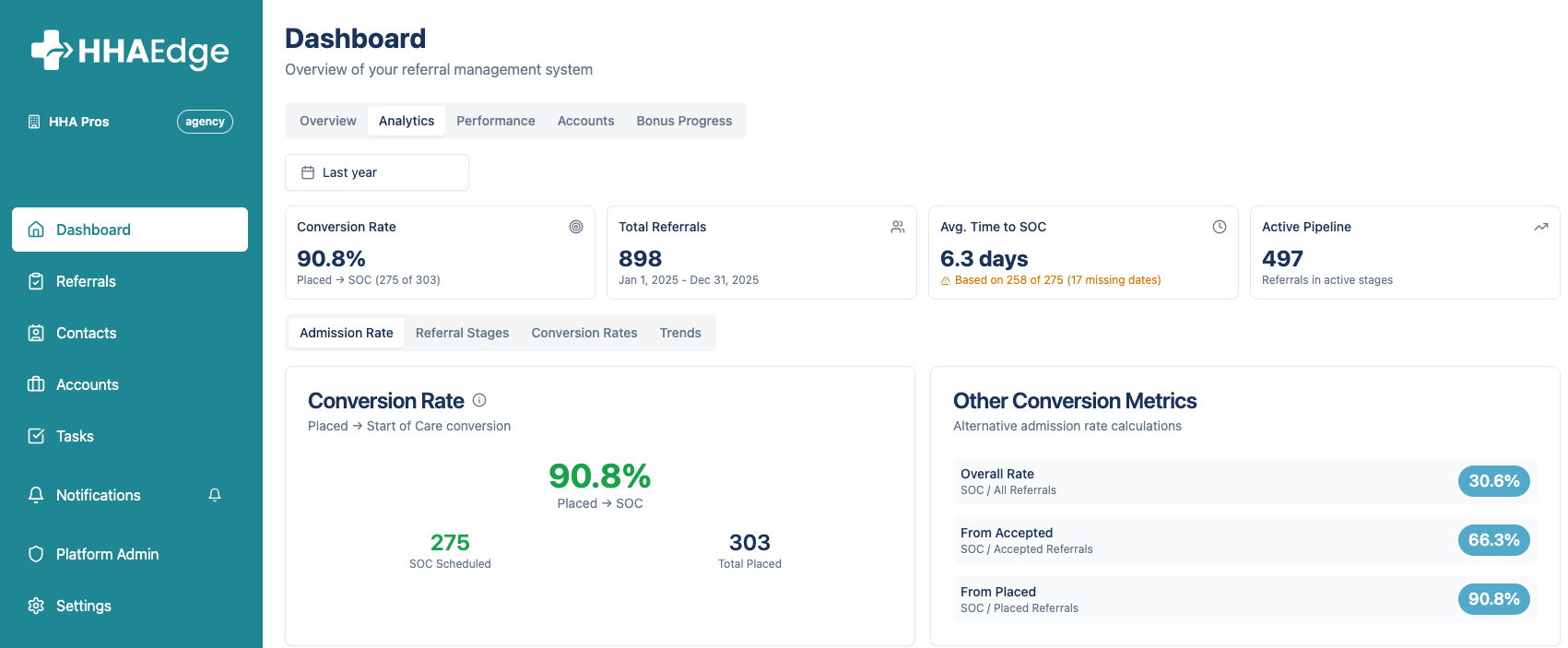
Dashboards are your window into operations. They provide real-time insights into key metrics. From conversion rates to SOC timeliness, dashboards keep you informed.
Set up dashboards that track your most important KPIs. Use them to spot trends, identify issues, and celebrate successes. A good dashboard is simple, clear, and actionable.
Regularly review data with your team. Use insights to adjust strategies and improve performance. With effective monitoring, you maintain control and drive operational resilience.
In conclusion, building a system that reduces referral leakage and boosts conversion rates requires clear roles, effective SLAs, and robust monitoring. Your agency's growth and reputation depend on it.
TAGS
Get More Insights Like This
Join 500+ home health professionals receiving weekly strategies to grow their census